
PTFE vs. EPDM for Industrial Valves
PTFE and EPDM are two of the most widely used polymer materials in industrial valve sealing and lining applications, but they serve very different engineering purposes. PTFE is a fluoropolymer known for exceptional chemical resistance, low friction, and broad temperature capability, while EPDM is an elastomer valued for elasticity, weather resistance, and outstanding performance with water and steam. Selecting between them requires more than comparing material properties in isolation. Engineers must consider the process medium, concentration, temperature, pressure, flow conditions, environmental exposure, sealing mechanism, and expected service life. This article examines the technical differences between PTFE and EPDM and provides a practical framework for selecting the appropriate material for industrial valves.
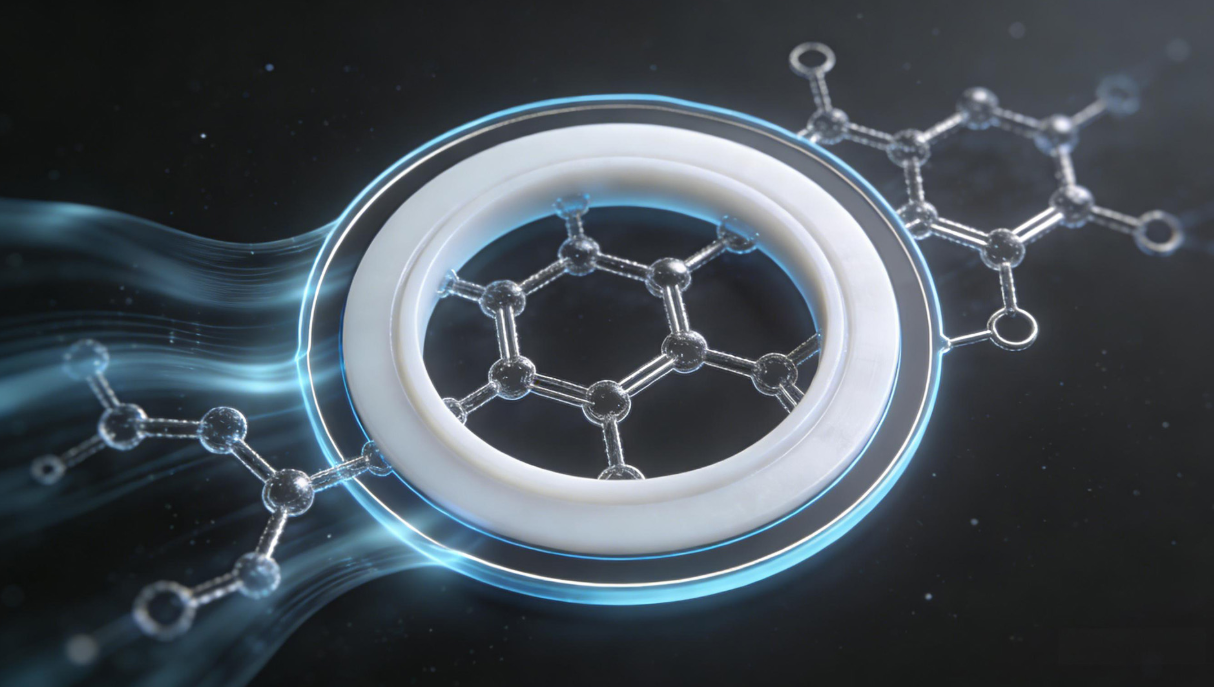
Polytetrafluoroethylene, commonly abbreviated as PTFE, is a fluoropolymer with a carbon-fluorine molecular structure that provides exceptional resistance to chemical attack. Its very low surface energy also gives it a low coefficient of friction and strong non-stick characteristics. These properties make PTFE particularly valuable for valve seats, gaskets, diaphragms, liners, packing components, and other sealing applications where aggressive chemicals or low-friction operation are important.
PTFE is often selected for applications involving acids, bases, salts, solvents, and other corrosive process chemicals. It is also attractive in pharmaceutical, food-processing, semiconductor, electroplating, and chemical industries where chemical compatibility and material cleanliness are critical. However, its excellent chemical resistance should not be interpreted as universal compatibility. Temperature, concentration, pressure, exposure time, mechanical stress, and the specific chemical involved can significantly affect actual service performance.
Ethylene propylene diene monomer, or EPDM, is a synthetic elastomer characterized by excellent resistance to weathering, ozone, ultraviolet radiation, water, and steam. Unlike PTFE, EPDM is a flexible rubber rather than a relatively rigid fluoropolymer. This elasticity enables EPDM seals to deform against mating surfaces and maintain effective contact even when the sealing components experience dimensional variations.
EPDM is widely used in water-service valves, HVAC systems, municipal pipelines, fire-protection equipment, cooling-water systems, wastewater treatment, and outdoor installations. It performs particularly well when the primary medium is water, hot water, or steam within the material's applicable temperature and pressure range. Its resistance to sunlight and ozone also makes it a practical choice for exposed piping systems.
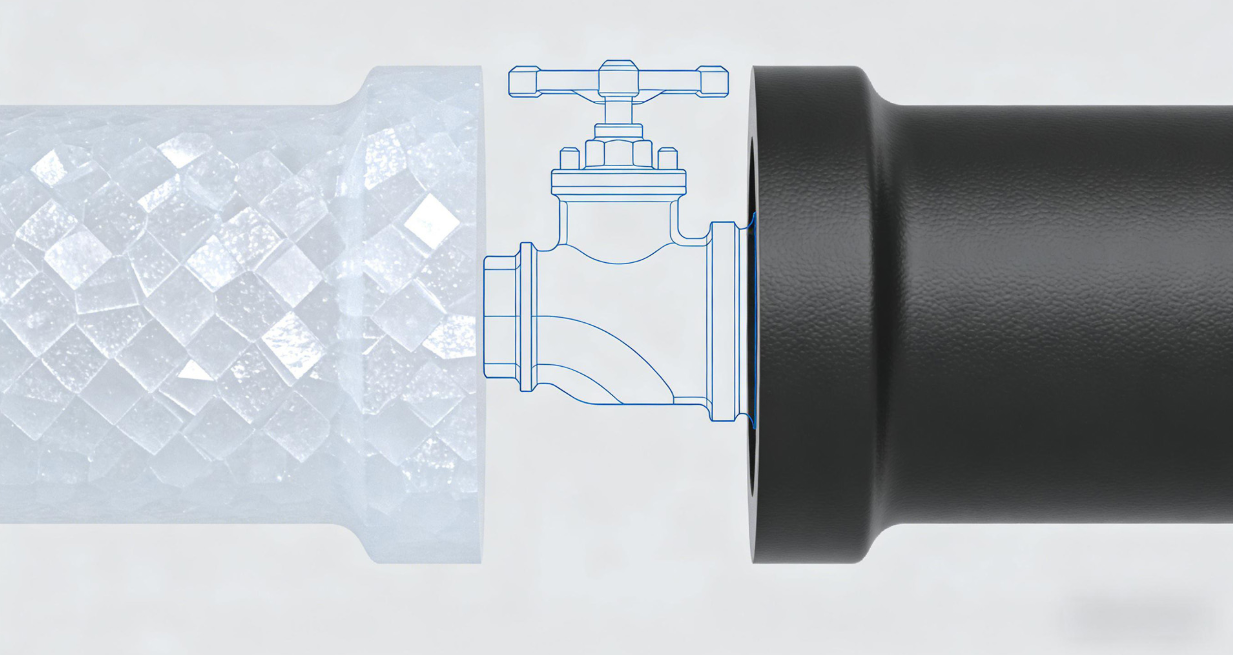
The most important distinction between PTFE and EPDM is that they are designed around different performance strengths. PTFE emphasizes chemical inertness, low friction, and broad chemical compatibility, while EPDM emphasizes elasticity, weather resistance, and water/steam service.
| Property | PTFE | EPDM |
|---|---|---|
| Material type | Fluoropolymer | Synthetic elastomer |
| Chemical resistance | Excellent for many aggressive chemicals | Good for water-based media; chemical resistance is more selective |
| Acids | Generally excellent, application dependent | Limited depending on acid and concentration |
| Alkalis | Generally excellent, application dependent | Generally good for many dilute aqueous alkalis |
| Water | Excellent | Excellent |
| Hot water | Good to excellent within design limits | Excellent |
| Steam | Application dependent | Very good for many valve sealing applications |
| Oils/hydrocarbons | Generally good, but chemical-specific | Generally poor to unsuitable |
| Weathering | Excellent | Excellent |
| Ozone resistance | Excellent | Excellent |
| UV resistance | Excellent | Excellent |
| Friction | Very low | Higher than PTFE |
| Elasticity | Low compared with rubber | High |
| Compression recovery | Relatively limited | Excellent |
| Mechanical flexibility | Limited | Excellent |
| Typical valve role | Seat, liner, gasket, packing | Seat, gasket, O-ring, diaphragm |
| Typical applications | Chemical and corrosive services | Water, HVAC, fire protection, outdoor systems |
These characteristics demonstrate why a direct "which material is better?" comparison is misleading. The correct material depends on what the valve must resist and how the sealing element is mechanically loaded.
Chemical resistance is one of PTFE's most important advantages. The strong carbon-fluorine bonds in PTFE make the polymer highly resistant to chemical attack across a wide range of industrial media. This is why PTFE-lined valves and PTFE-seated valves are frequently found in chemical processing, acid handling, electroplating, and other corrosive-service applications.
Typical media for which PTFE may be considered include various inorganic acids, organic acids, alkalis, salts, and many solvents. However, chemical compatibility tables should always be consulted for the exact medium and operating conditions. A chemical that is compatible with PTFE at room temperature may present different behavior at elevated temperature or under pressure.
The engineer should therefore evaluate at least four variables simultaneously:
- Chemical identity
- Concentration
- Operating temperature
- Exposure duration
Additional factors such as pressure, mechanical stress, permeation, and contamination can also become important in demanding applications.
EPDM's strongest chemical-service area is generally water and water-based media. It has excellent resistance to hot water and steam and is widely used in municipal water, HVAC, cooling, and wastewater applications.
This makes EPDM highly practical for systems where corrosion resistance of the seal is required, but extreme solvent or chemical resistance is unnecessary. For example, a water-treatment pipeline operating with relatively clean water may benefit from the elasticity and sealing performance of EPDM without requiring the additional chemical resistance and cost associated with PTFE.
However, EPDM is generally unsuitable for many petroleum-based oils, fuels, and hydrocarbon-containing fluids. Certain concentrated chemicals and aggressive solvents can also cause swelling, degradation, or loss of mechanical properties. Therefore, the presence of "water" in a process does not automatically mean EPDM is suitable if other additives or contaminants are present.
PTFE is known for maintaining useful properties across a broad temperature range compared with many conventional sealing polymers. This characteristic makes it attractive for applications where both low-temperature and moderately high-temperature chemical resistance are required.
Nevertheless, engineers should distinguish between the temperature at which PTFE remains chemically stable and the temperature at which a particular PTFE component can safely operate under mechanical load. Valve seats, gaskets, and liners can experience deformation, creep, or changes in sealing behavior when subjected to elevated temperature and pressure.
PTFE also exhibits relatively high thermal expansion. Consequently, valve designers must consider dimensional changes and sealing forces when PTFE components are exposed to significant temperature cycles. A PTFE seat that performs well at one operating temperature may require a different design or energizing mechanism when thermal cycling is severe.
EPDM is particularly well suited to hot-water and steam-related applications because its elastomeric properties remain useful over a broad service range. This is one reason EPDM seals are common in heating systems, HVAC equipment, circulation systems, and water valves.
However, "steam compatible" does not mean that every EPDM compound is suitable for every steam application. Saturated steam, superheated steam, pressure, temperature, cycle frequency, and valve design all affect seal life. For high-temperature steam service, the valve manufacturer should provide a specific material recommendation rather than relying solely on a generic EPDM temperature rating.
PTFE's low coefficient of friction is a major advantage in valve applications. A PTFE seat can reduce operating friction between moving components, which can be particularly useful for quarter-turn valves such as ball valves and butterfly valves.
However, PTFE is not as elastic as EPDM. When used as a sealing component, it cannot deform and recover in the same manner as an elastomer. This difference has major consequences for valve design.
PTFE components may experience creep or cold flow under sustained compressive loading. Therefore, valve designers often use carefully engineered seat geometries, fillers, spring energization, or supporting structures to maintain sealing performance over time.
EPDM's greatest mechanical advantage is elasticity. When compressed between two mating surfaces, EPDM can deform to compensate for small imperfections and maintain contact pressure. This characteristic makes it extremely effective for O-rings, gaskets, soft seats, and other flexible sealing elements.
The same elasticity that benefits sealing can also create limitations. Rubber compounds can be affected by compression set, swelling, temperature, chemical exposure, and aging. If EPDM is exposed to an incompatible fluid for an extended period, its physical properties may deteriorate even if the initial seal appears satisfactory.
PTFE is widely used for ball valve seats because the material's low friction supports smooth ball rotation while providing effective shutoff. PTFE seats can also provide excellent resistance to many corrosive process fluids.
For chemical processing, a PTFE-seated ball valve may be specified when the process medium is aggressive, but the operating temperature remains within the seat design limits. The valve body may be carbon steel, stainless steel, or another suitable alloy, while PTFE provides the primary fluid-contact sealing surface.
The engineer must nevertheless consider permeation, thermal expansion, seat deformation, pressure rating, and pressure-temperature limitations when selecting a PTFE-seated ball valve.
EPDM is commonly used as the resilient seat or liner material in butterfly valves serving water, HVAC, cooling, and fire-protection systems. The rubber seat can provide effective shutoff with relatively low sealing forces while accommodating minor dimensional variations.
This combination makes EPDM butterfly valves economical and practical for large-diameter pipelines. Water-treatment facilities, building services, district heating systems, and cooling-water networks often use resilient-seated butterfly valves because the operating conditions are well matched to EPDM's material characteristics.
However, the compatibility of EPDM with disinfectants, chemicals, oils, or process additives should be confirmed before specification.
Chemical processing represents one of the clearest application areas for PTFE. Process plants may handle hydrochloric acid, sulfuric acid, nitric acid, organic acids, alkalis, solvents, and mixed chemical streams. Valve seats and liners exposed directly to these media must resist chemical degradation while maintaining sealing integrity.
PTFE is therefore frequently considered for corrosive chemical service, although the exact polymer grade and valve construction must be matched to the process. Where abrasive solids, extreme temperatures, or unusual reactive chemicals are involved, alternative materials or engineered fluoropolymers may be necessary.
EPDM generally has a narrower role in aggressive chemical processing. It can still be useful for water-based auxiliary systems, cooling systems, and selected dilute chemical services, but chemical compatibility must be confirmed for each specific medium.
Water and wastewater treatment systems represent a major application for EPDM. Valves in these facilities commonly encounter raw water, treated water, wastewater, cooling water, and various aqueous treatment chemicals.
The excellent resistance of EPDM to water, weathering, and ozone makes it particularly useful for resilient-seated valves installed indoors and outdoors. Large butterfly valves with EPDM seats can provide economical flow isolation across large pipeline diameters.
PTFE can also be used in water-treatment equipment when stronger chemical resistance is required, particularly in chemical dosing or aggressive process streams. However, using PTFE simply because it has greater chemical resistance may not be economically justified when EPDM already provides adequate performance.
EPDM is particularly common in heating, ventilation, and air-conditioning systems. These systems frequently involve chilled water, hot water, glycol-containing fluids, and outdoor environmental exposure.
The elastomer's flexibility helps provide reliable sealing across repeated thermal cycles. Its resistance to ozone and weathering is also useful for equipment installed in exposed mechanical areas.
Nevertheless, engineers must check compatibility when glycol concentration, additives, cleaning chemicals, or corrosion inhibitors are introduced. A valve that is suitable for plain water should not automatically be assumed to be compatible with every HVAC fluid formulation.
PTFE is frequently considered where chemical resistance, low extractables, low friction, and cleanability are important. Pharmaceutical and high-purity applications may place stringent requirements on wetted materials, surface finish, dead-leg geometry, cleaning procedures, and contamination control.
In these systems, the choice cannot be based solely on whether PTFE or EPDM has better general chemical resistance. The complete valve design must satisfy the applicable process requirements. Elastomer selection may also depend on sterilization conditions, cleaning agents, temperature cycles, and regulatory or material documentation.
Both PTFE and EPDM exhibit excellent resistance to outdoor weathering compared with many conventional polymers, but EPDM is especially well established in outdoor sealing applications because of its resistance to ozone, UV exposure, and environmental aging.
This makes EPDM attractive for exposed water pipelines, cooling towers, fire-protection systems, municipal infrastructure, and building services. The material can maintain useful elasticity under long-term environmental exposure, provided that the process medium is compatible.
For outdoor valve installations, however, material selection should not stop at the seal. Valve-body coating, fastener material, stem protection, actuator enclosure, cable glands, and drainage design all influence the overall durability of the assembly.
PTFE can also be valuable outdoors when the valve is exposed to corrosive chemicals. For example, a chemical-processing facility may require valves that combine outdoor environmental resistance with aggressive process-fluid compatibility.
In such applications, PTFE may protect the fluid-contact surfaces while the valve body and external components require independent corrosion-protection measures. A PTFE lining does not automatically protect the external metallic structure from atmospheric corrosion.
Material compatibility is only one part of valve selection. Flow conditions can impose mechanical stresses that significantly influence seal performance.
At elevated pressure, soft sealing materials can experience deformation or extrusion if the valve design does not adequately support them. PTFE and EPDM therefore require appropriate seat geometry and material formulation for the intended pressure range.
For PTFE, creep and cold flow become particularly important under sustained load. For EPDM, compression behavior, extrusion resistance, and temperature-dependent elasticity must be considered.
Engineers should therefore review the complete pressure-temperature rating of the valve rather than selecting a material solely from a material-property table.
Neither PTFE nor EPDM should automatically be considered ideal for highly abrasive slurry service simply because the materials have good chemical resistance.
Suspended solids can cause erosion, cutting, abrasion, or accelerated wear of soft seats and liners. If a process contains sand, catalyst particles, crystals, scale, or other solids, the engineer should evaluate particle size, concentration, velocity, hardness, and valve geometry.
For highly abrasive service, hardened metallic seats, ceramic materials, specialized elastomers, or engineered polymer compounds may be more appropriate depending on the process.
A common valve-selection mistake is to use generalized statements such as "PTFE resists all chemicals" or "EPDM is suitable for water." Such statements are useful as preliminary guidance but are insufficient for engineering specification.
A proper compatibility review should include:
- Medium: Identify every significant chemical component.
- Concentration: Determine the actual concentration rather than the chemical name alone.
- Temperature: Evaluate normal, maximum, minimum, and transient temperatures.
- Pressure: Consider operating and maximum differential pressure.
- Exposure time: Determine whether exposure is intermittent or continuous.
- Flow velocity: Assess erosion and dynamic effects.
- Mechanical stress: Consider compression, extrusion, and cycling.
- Cleaning conditions: Include CIP, flushing, sterilization, or chemical cleaning.
- Solids: Evaluate abrasion and particle loading.
- Manufacturer data: Confirm the final selection using technical compatibility information.
This systematic approach is much more reliable than choosing a polymer based on a single general-purpose chemical-resistance chart.
Start with the actual fluid rather than the industry sector. "Chemical plant" is too broad to determine the appropriate sealing material. The engineer should identify the chemical composition, concentration, contaminants, and additives.
Define normal and maximum pressure and temperature, including startup, shutdown, cleaning, flushing, and abnormal conditions. Transient conditions are particularly important because a seal may experience temperatures or chemical concentrations substantially different from normal operation.
Decide whether the valve is intended for isolation, throttling, control, check service, emergency shutdown, or another function. The valve's operating mechanism determines how the sealing material is mechanically loaded.
At this stage, compare PTFE and EPDM according to:
- Chemical compatibility
- Temperature capability
- Pressure capability
- Elasticity
- Friction
- Compression behavior
- Wear resistance
- Weather resistance
- Expected service life
- Maintenance requirements
The final selection should be based on the actual valve construction rather than material properties alone. A PTFE seat in one valve design may behave differently from a PTFE-lined valve in another because geometry, support, pressure class, and manufacturing process affect performance.
PTFE's chemical resistance is impressive, but maximum chemical resistance does not automatically translate into the best overall valve design. If the system primarily handles water and requires highly elastic soft sealing, EPDM may provide an appropriate and economical solution.
Selecting PTFE without considering valve design, temperature, pressure, and mechanical behavior can create unnecessary cost or introduce other performance limitations.
Water compatibility is a strong reason to consider EPDM, but the actual system may contain chlorine, disinfectants, oils, solvents, glycols, cleaning agents, or other chemicals. The complete fluid composition must therefore be reviewed.
The water temperature also matters. Hot water and steam service should be checked against the specific EPDM compound and valve manufacturer's rating.
A valve can experience hundreds or thousands of heating and cooling cycles during its service life. Repeated thermal expansion and contraction can affect both PTFE and EPDM, although through different mechanisms.
PTFE may experience dimensional changes and creep, while EPDM can experience aging, compression-set changes, and changes in elasticity. Therefore, a valve intended for continuous thermal cycling should be selected based on cycle requirements rather than a single steady-state temperature.
Initial purchase price is another factor, but industrial valve selection should be based on lifecycle economics. The least expensive sealing material may not provide the lowest total cost if it requires frequent replacement or causes unplanned shutdowns.
A lifecycle assessment can include:
| Cost factor | PTFE consideration | EPDM consideration |
|---|---|---|
| Initial valve cost | May be higher depending on construction | Often economical |
| Chemical compatibility | Strong advantage in many corrosive services | More limited |
| Replacement frequency | Potentially low when correctly specified | Potentially low in compatible water service |
| Maintenance | Depends heavily on application | Generally straightforward |
| Downtime risk | Low when correctly selected | Low when correctly selected |
| Outdoor durability | Excellent | Excellent |
| Process contamination risk | Often attractive for demanding applications | Application dependent |
The economically correct material is therefore the one that provides adequate performance throughout the required service life, not necessarily the one with the lowest initial purchase price.
The following simplified guide can help engineers identify which material deserves closer evaluation:
| Application | PTFE | EPDM |
|---|---|---|
| Municipal water | Suitable | Highly suitable |
| Wastewater | Suitable | Highly suitable |
| Cooling water | Suitable | Highly suitable |
| HVAC hot water | Suitable | Highly suitable |
| Outdoor water systems | Suitable | Highly suitable |
| Strong acids | Often preferred, subject to compatibility | Generally limited |
| Strong alkalis | Often preferred, subject to compatibility | Application dependent |
| Organic solvents | Often preferred, chemical-specific | Generally limited |
| Petroleum oils | Chemical-specific | Generally unsuitable |
| Pharmaceutical chemical service | Often suitable | Application dependent |
| Chemical dosing | Often suitable | Depends on chemical |
| Steam | Application dependent | Often suitable within compound limits |
| Abrasive slurry | Requires careful design | Requires careful design |
This table should be treated as a preliminary screening tool rather than a final material-selection specification. The exact medium, concentration, temperature, pressure, and valve construction must be verified before procurement.
Industrial valve development is increasingly focused on engineered compounds rather than simply choosing between generic PTFE and EPDM. Modified PTFE grades, filled PTFE compounds, peroxide-cured EPDM, specialized EPDM formulations, and other engineered polymers can provide different combinations of wear resistance, creep resistance, chemical compatibility, and temperature performance.
Digital maintenance is also changing how sealing materials are evaluated. Smart valve systems can provide information about operating cycles, torque, position, and abnormal behavior. Such information can help maintenance teams identify changes in valve performance that may be associated with seal wear or process changes.
As industrial plants move toward predictive maintenance, the sealing material will increasingly be evaluated as part of the complete valve lifecycle rather than as an isolated component.
PTFE and EPDM are both highly valuable valve materials, but their strengths are fundamentally different. PTFE is particularly attractive for demanding chemical applications because of its broad resistance to many aggressive media, low friction, and useful temperature capability. EPDM is especially effective in water, hot-water, steam, HVAC, fire-protection, wastewater, and outdoor applications because of its elasticity, weather resistance, and strong resistance to water and ozone.
The correct selection depends on the complete operating environment rather than on a simple material ranking. Engineers should evaluate the process medium, concentration, temperature, pressure, flow velocity, thermal cycling, mechanical loading, environmental exposure, and valve design before specifying a sealing or lining material. For chemical services, compatibility should always be confirmed using reliable manufacturer data for the exact conditions.
Ultimately, the question is not whether PTFE or EPDM is inherently superior. The engineering objective is to select the material whose chemical, thermal, mechanical, and environmental characteristics match the actual duty. When this approach is combined with appropriate valve design, accurate sizing, quality manufacturing, and a well-planned maintenance strategy, both PTFE and EPDM can deliver reliable sealing performance and long service life in their respective applications.

BALTIC VALVE CO., LTD supplies superior quality industrial valves covering ball valves, globe valves, gate valves, check valves, plug valves, butterfly valves, marine valves, forging steel valve, filter, etc.

PTFE vs. EPDM for Industrial Valves
Sep 18, 2026

Valve Type and Actuator Torque Selection
Sep 06, 2026

How Check Valves Stop Reverse Flow
Aug 24, 2026
Baltic Valve Co., Ltd.
Add: Baltic Valve Park, Siming, Xiamen, China.
Tel: +86 592 8266 140
Fax: +86 592 8266 440
Mail: [email protected]
Website: https://www.baltic-valve.com
Copyright © 2017-2026 Baltic Valve Co., Ltd. All rights reserved. Privacy Policy | Terms of Service
Website Design & Support: jeawin.com