
Outdoor Pipeline Valves: Gate vs. Butterfly
How should engineers choose between gate valves and butterfly valves for outdoor pipeline systems? In most municipal water, wastewater, HVAC, and general utility applications, butterfly valves are attractive because of their compact design, light weight, quarter-turn operation, and competitive installation cost. Gate valves are often preferred where a full-bore flow path, low obstruction when fully open, or a particular shutoff arrangement is required; however, pressure, temperature, sealing performance, operating frequency, and maintenance conditions must determine the final choice.
The decision is not simply "butterfly valves for ordinary service and gate valves for demanding service." Both valve types are available in different materials, pressure classes, seat designs, and configurations. A resilient-seated gate valve may provide excellent shutoff in a water network, while a high-performance or triple-offset butterfly valve can be engineered for demanding industrial conditions. Correct selection requires an understanding of valve construction, hydraulic behaviour, environmental exposure, and the applicable product standards.
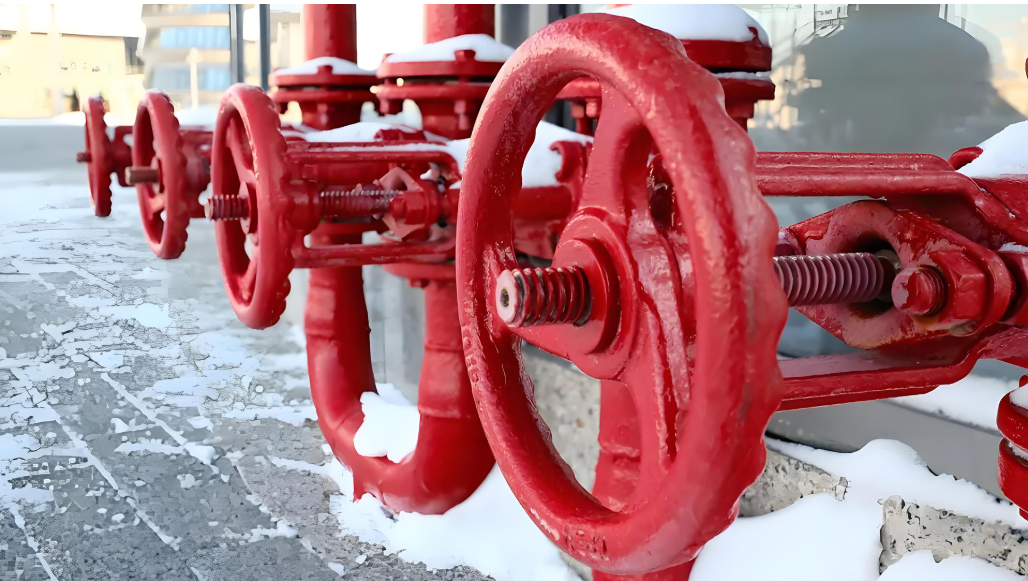
Outdoor pipeline valves operate in environments that can be more demanding than those found inside controlled industrial buildings. In addition to internal pressure and fluid temperature, they may be exposed to sunlight, rain, frost, wind, airborne contaminants, soil moisture, flooding, and large day-to-night temperature variations. Buried valves face different challenges, including soil corrosion, groundwater infiltration, settlement, and limited access for inspection.
A valve installed outdoors must therefore do more than control fluid flow. Its body, coating, stem seals, seat materials, fasteners, gearbox, actuator, and position indicators must all remain suitable for the local environment. The choice between a gate valve and a butterfly valve affects not only the purchase price but also installation space, operating time, hydraulic losses, maintenance requirements, and the consequences of failure.
Typical outdoor applications include:
- Municipal drinking-water transmission and distribution networks.
- Wastewater treatment plants and sewage pipelines.
- Outdoor fire-protection water mains.
- Cooling-water and condenser-water systems.
- District heating and cooling networks.
- Industrial utility pipelines.
- Irrigation and agricultural water systems.
- Water intake and discharge facilities.
- Above-ground process pipelines and pipe racks.
In these applications, butterfly valves are frequently used for large-diameter isolation because of their compact face-to-face dimensions and relatively low weight. Gate valves remain widely used for water-network isolation, particularly in buried distribution branches and locations where a full-bore passage is advantageous.
The most fundamental difference between a gate valve and a butterfly valve is the way each valve controls the flow passage. A gate valve uses a movable gate or wedge that travels perpendicular to the direction of flow. A butterfly valve uses a rotating disc mounted on a shaft, with the disc turning through approximately 90 degrees between its fully open and fully closed positions.
A conventional gate valve consists of a body, bonnet, gate or wedge, stem, seat rings, packing, and an operating mechanism. When the handwheel or actuator turns the stem, the gate moves upward or downward. In the fully open position, the gate is withdrawn from the flow passage, leaving a relatively unobstructed opening.
Gate valves are primarily designed for on/off isolation rather than continuous flow regulation. When fully open, they generally create relatively little obstruction to the flow. When partially open, however, the gate and seat surfaces can experience high-velocity flow, turbulence, vibration, and erosion. For this reason, ordinary gate valves should not normally be used as throttling devices unless the design and manufacturer specifically permit that duty.
Common gate-valve configurations include:
- Wedge gate valves: Use a wedge-shaped closure element that presses against the seats when closed.
- Parallel-slide gate valves: Use parallel seating surfaces and are found in particular industrial applications.
- Resilient-seated gate valves: Use an elastomer-coated or elastomer-faced wedge to provide tight shutoff, particularly in waterworks systems.
- Metal-seated gate valves: Use metal-to-metal seating arrangements for services where the design requires them.
The stem may be rising or non-rising. An outside-screw-and-yoke (OS&Y) design allows the stem position to indicate whether the valve is open or closed, while a non-rising-stem design keeps the overall operating height more compact. This distinction is important when selecting valves for underground chambers, roadside installations, and restricted outdoor spaces.
A butterfly valve consists of a body, disc, shaft or stem, seat, shaft seals, and an operating mechanism. The disc rotates around the shaft axis. When the disc is parallel to the flow direction, the valve is open; when it rotates approximately 90 degrees, it blocks the flow passage.
Because the disc remains inside the pipeline even when the valve is fully open, a butterfly valve creates some flow obstruction. Nevertheless, its compact structure and short face-to-face dimensions make it particularly useful for large-diameter pipelines.
Common butterfly valve configurations include:
- Concentric butterfly valves: The shaft, disc, and seat are arranged concentrically. Many resilient-seated designs use an elastomer seat and are widely applied in water and utility services.
- Double-offset butterfly valves: The shaft is offset from the disc centre and seat plane, reducing seat contact during rotation and improving performance in suitable higher-pressure applications.
- Triple-offset butterfly valves: Three geometric offsets create a cam-like seating action, commonly used with metal seats for demanding industrial duties.
- Wafer butterfly valves: Installed between pipeline flanges and held in place by flange bolts.
- Lug butterfly valves: Have threaded lugs around the body, allowing certain installation arrangements, including some dead-end configurations when specifically rated.
- Double-flanged butterfly valves: Use flanges at both ends and are often selected for larger or heavier-duty pipeline installations.
The different designs should not be treated as interchangeable. A small concentric rubber-seated butterfly valve for a water line has a different service envelope from a triple-offset metal-seated valve used in a high-temperature process pipeline.
Space and structural loading are important considerations for outdoor piping systems. Valves may be installed on elevated pipe racks, in underground chambers, beside pumps, or within crowded water-treatment facilities. The dimensions and weight of a valve affect the design of supports, lifting arrangements, access platforms, and maintenance clearances.
Butterfly valves usually have shorter face-to-face dimensions than gate valves of comparable nominal size. Their bodies are also often lighter, particularly in large diameters. This can reduce the load imposed on pipeline supports and simplify handling during installation.
The advantages are especially noticeable in large-diameter systems. A DN600 butterfly valve may be easier to accommodate in a compact pipe chamber than a gate valve of the same nominal diameter, depending on the valve design and actuator arrangement.
Butterfly valves are often suitable for:
- Pipe racks with limited longitudinal space.
- Large-diameter water mains.
- Pump stations with closely spaced equipment.
- Underground valve chambers with restricted dimensions.
- Outdoor cooling-water headers.
- Retrofit projects where existing pipeline spacing is limited.
However, the valve body itself is not the only dimension that matters. The disc must have sufficient clearance during installation, and the actuator or gearbox requires operating and maintenance space. For a lug or wafer valve, flange alignment and bolt access must also be considered.
Gate valves generally require more space along the pipeline and may need greater vertical clearance, particularly when they have rising stems. Their weight can also increase significantly with nominal diameter and pressure class.
For buried installations, a non-rising-stem gate valve can be operated through a valve box or extension spindle. This makes it practical for municipal distribution networks. In above-ground installations, an OS&Y gate valve may be selected where visible stem position is useful for inspection or operational control.
Engineers should check:
- Overall face-to-face and end-to-end dimensions.
- Stem or actuator operating clearance.
- Access for handwheel or gearbox operation.
- Lifting points and installation weight.
- Pipeline support and anchoring requirements.
- Space required for disassembly and maintenance.
- Access to bolts, packing glands, and removable components.
Practical point: A butterfly valve is often easier to fit into a space-constrained large-diameter pipeline, but the final layout must include the actuator, disc clearance, and maintenance access. A gate valve may be more convenient in a buried water network when its operating nut and extension spindle are designed for that installation.
Operating speed is another major difference between the two valve types. A butterfly valve typically completes its travel with a quarter-turn, while a gate valve requires multiple stem rotations to move the gate through its full stroke.
The 90-degree movement of a butterfly valve makes it suitable for applications requiring relatively fast opening and closing. It can be operated by a lever in smaller sizes or by a gearbox, pneumatic actuator, hydraulic actuator, or electric actuator in larger or automated installations.
Typical applications include:
- Isolation of cooling-water branches.
- Pump suction and discharge isolation where the selected design is suitable.
- Automated water-distribution networks.
- Remote-operated industrial utility systems.
- Emergency isolation arrangements where the specified actuator and closure time meet the safety requirements.
A quarter-turn valve does not necessarily close instantaneously. Actuators and gearboxes can be configured to control the operating time. This is important because rapid closure in a liquid pipeline may generate water hammer.
Gate valves normally require more time to open or close because the gate must travel through its full vertical stroke. This makes them suitable for isolation points that are not operated frequently.
The slower movement may reduce the risk of sudden flow interruption when compared with an equally rapid quarter-turn closure, but it does not eliminate water hammer. Surge behaviour depends on pipeline length, fluid velocity, wave speed, valve characteristics, and the actual closure profile.
Gate valves are commonly used for:
- Main isolation points in water distribution networks.
- Buried branch pipelines.
- Equipment isolation where operation is infrequent.
- Sections of pipeline that require a full-bore opening when in service.
| Factor | Butterfly valve | Gate valve |
|---|---|---|
| Typical travel | Approximately 90 degrees | Multiple stem rotations |
| Operating time | Usually shorter | Usually longer |
| Manual operation | Lever or gearbox | Handwheel or gearbox |
| Automation | Quarter-turn actuator | Multi-turn actuator |
| Frequent operation | Often suitable, subject to design | Depends on design; ordinary gate valves are generally isolation valves |
| Flow regulation | Some designs can regulate flow | Generally unsuitable for throttling |
| Position indication | Disc/shaft position indicator | Stem position, especially on rising-stem designs |
| Surge considerations | Rapid closure can create pressure transients | Closure time can be longer, but surge analysis is still required |
The operating frequency should be considered alongside the valve's intended function. A valve that is rarely operated but must provide dependable isolation may be selected differently from a valve that is routinely adjusted by an automated control system.
Sealing performance is one of the most important factors in outdoor valve selection. Leakage may result in water loss, environmental contamination, fire-protection system impairment, production interruption, or the release of hazardous substances. The required shutoff performance should therefore be specified according to the service rather than inferred from the valve type alone.
Many waterworks butterfly valves use an elastomeric seat, commonly made from EPDM or another application-specific rubber compound. The disc presses against the seat when the valve closes, creating a seal around the circumference.
When correctly selected and installed, resilient-seated butterfly valves can provide effective shutoff in municipal water, wastewater, and general utility systems. Their sealing performance depends on several factors:
- Elastomer type and compatibility with the fluid.
- Operating temperature and pressure differential.
- Disc and seat surface condition.
- Shaft alignment and bearing condition.
- Installation accuracy and flange alignment.
- Ageing, wear, and chemical exposure.
EPDM is frequently used in water-service applications because it performs well in many water-based environments. However, the suitability of any elastomer depends on the exact water chemistry, disinfectants, temperature, and operating conditions. Chlorine and chloramine exposure, for example, can affect elastomer durability over time. AWWA's revision information for C504 specifically identifies chlorine and chloramine degradation of elastomers as a design consideration.
Gate valves are available with both resilient and metal seating arrangements. This distinction is important because it is inaccurate to assume that all gate valves use metal-to-metal seals.
Resilient-seated gate valves are widely used in water distribution systems. Their elastomer-faced wedge can provide tight shutoff when the valve is properly designed and maintained. AWWA C509, for example, covers iron-body resilient-seated gate valves for water supply service. The standard's stated temperature range is 0.6–52°C, and its scope includes design, materials, testing, inspection, and marking requirements.
Metal-seated gate valves may be selected for particular industrial services where temperature, fluid characteristics, or design requirements make an elastomeric seat unsuitable. Their shutoff performance depends on seat geometry, material pairing, surface finish, pressure differential, and manufacturing quality. Metal seating does not automatically guarantee zero leakage.
Butterfly valves should not be restricted to ordinary low-pressure water service. Double-offset and triple-offset designs are available for higher pressure classes and demanding industrial applications. Triple-offset butterfly valves commonly use metal seating arrangements and can be specified for certain high-temperature services.
The offset geometry reduces rubbing between the disc and seat during much of the operating stroke. This can help reduce wear compared with some concentric designs. Nevertheless, the allowable pressure, temperature, leakage class, and cycle life must be verified for the particular product.
The practical selection principle is straightforward: compare the actual seat design and certified performance, not merely the names "gate valve" and "butterfly valve."
The pressure-temperature envelope is central to valve selection. A valve must withstand the maximum design pressure at the relevant metal temperature, including foreseeable transient conditions. The body material, wall thickness, seat design, stem, bolting, and end connections all contribute to the overall pressure-retaining capability.
Concentric, resilient-seated butterfly valves are widely used in water distribution, wastewater, cooling-water, and HVAC systems. Their compact design makes them particularly attractive for larger pipelines where a gate valve would be heavier and require more installation space.
For waterworks applications, AWWA C504 is a key standard for rubber-seated butterfly valves. The 2023 edition establishes minimum requirements for this product category. Its scope includes design and product requirements for rubber-seated butterfly valves used in water applications. Engineers should consult the standard and the manufacturer's data to confirm the exact size, pressure, temperature, and configuration limits.
Gate valves are available in a wide range of pressure classes and materials, including ductile iron, cast carbon steel, stainless steel, and alloy steel. Industrial designs can be specified for services involving higher pressures and temperatures than those normally associated with municipal waterworks valves.
However, the statement that gate valves are inherently better for high pressure is too broad. High-performance butterfly valves can also be designed for substantial pressure ratings. The choice depends on the product standard, valve geometry, material, seat construction, and design conditions.
For steel valves, ASME B16.34 is an important reference. The 2025 edition covers pressure-temperature ratings, materials, dimensions, tolerances, nondestructive examination requirements, testing, and marking for covered valves. It should be applied with the relevant piping code and valve product specification.
Temperature can affect both the body material and the sealing system. At elevated temperatures, elastomers may soften, harden, lose elasticity, or undergo chemical degradation. At low temperatures, some rubber compounds may become less flexible, reducing their ability to maintain a reliable seal.
For high-temperature steam, hot oil, or other demanding process media, a conventional rubber-seated butterfly valve may be unsuitable. A metal-seated butterfly valve or a suitably specified gate valve may be more appropriate, depending on the design requirements.
At low outdoor temperatures, designers should consider:
- Minimum design temperature of the valve body.
- Low-temperature toughness of the body and pressure-retaining parts.
- Elastomer flexibility at the minimum temperature.
- Risk of water freezing in the valve cavity or adjacent pipework.
- Condensation and ice formation around external operating components.
- Whether heat tracing, insulation, or drainage is required.
The medium can be as important as pressure and temperature. Clean water, wastewater, seawater, cooling water, compressed air, steam, hydrocarbons, and chemical solutions impose different demands on the valve.
For example, wastewater may contain suspended solids and fibrous materials that can accumulate around the disc or interfere with the seat. A gate valve with a full-bore opening may be advantageous in some solids-handling services, but the exact design must be evaluated for clogging and sediment accumulation. Conversely, a suitable butterfly valve may be preferred in a large wastewater line because of its compact size and ease of automation.
Seawater and brackish water require particular attention to corrosion resistance. A ductile-iron valve with a suitable lining may be appropriate in some applications, while other services may require more corrosion-resistant disc, shaft, fastener, or body materials. Material selection should consider the complete wetted assembly rather than only the body.
The internal geometry of a valve affects pipeline pressure loss and energy consumption. A gate valve with its gate fully withdrawn generally provides a relatively unobstructed flow passage. A butterfly valve retains a disc in the flow path, even when fully open.
This difference can matter in systems with high flow rates, long operating hours, and substantial pumping costs. However, the actual pressure loss depends on the valve's design, opening position, size, flow coefficient, and installation conditions.
A butterfly valve's disc creates flow disturbance and a pressure drop. The magnitude varies with disc profile, shaft design, valve size, and degree of opening. When the valve is fully open, the loss may be acceptable for many waterworks and utility systems. When it is partially open, the disc can create greater turbulence and local velocity.
For a valve used in control service, engineers should evaluate the manufacturer's flow coefficient, typically expressed as \(C_v\) or \(K_v\), and the system's flow and pressure requirements.
Butterfly valves can be used for throttling when specifically designed and sized for control service. However, an ordinary isolation butterfly valve should not automatically be treated as a control valve. Prolonged operation at small openings may cause high local velocities, vibration, cavitation, noise, or seat damage.
Gate valves are generally not suitable for throttling because partial opening can expose the gate and seats to damaging flow conditions. If continuous flow regulation is required, engineers should consider a purpose-designed control valve or a butterfly valve with an appropriate control characteristic and actuator.
Outdoor water pipelines can be long and may contain pumps, check valves, elevation changes, and branches. Rapid closure can generate pressure waves that travel through the pipeline. If the resulting transient pressure is high enough, it may damage valves, fittings, pipe joints, or supports.
The Joukowsky relationship is commonly used to illustrate the relationship between fluid velocity change and pressure surge:
\[ \Delta P = \rho a \Delta V \]
Where:
- \(\Delta P\) is the pressure change.
- \(\rho\) is fluid density.
- \(a\) is the pressure-wave speed in the pipeline.
- \(\Delta V\) is the change in fluid velocity.
This relationship shows why a fast-closing quarter-turn valve can create a significant pressure surge in certain systems. It does not mean that butterfly valves should always be avoided. Rather, the closure time and actuator profile should be selected based on hydraulic transient analysis.
For large pipelines, a gearbox or actuator with controlled closing time may be used to reduce the risk of surge. A gate valve's slower operation can be helpful in some circumstances, but its closure profile and system dynamics must still be assessed.
Outdoor installations expose valves to environmental conditions that can gradually degrade coatings, seals, fasteners, and operating mechanisms. A valve may be mechanically suitable when new but experience premature problems if its external protection is inadequate.
Sunlight contains ultraviolet radiation that can contribute to ageing of exposed polymeric materials. Ozone, oxygen, temperature cycling, and chemical exposure can also affect elastomers. However, the primary seat of a butterfly or resilient-seated gate valve is generally located inside the valve body and is not directly exposed to sunlight in the same way as an external hose or gasket.
Therefore, it would be misleading to conclude that a soft-seated butterfly valve is inherently unsuitable for outdoor installation simply because it uses rubber. The more important questions are whether the seat compound is suitable for the service, whether the valve is exposed to abnormal temperatures or chemicals, and whether the external shaft seals and actuator components are adequately protected.
Common valve body materials for outdoor water systems include ductile iron, cast iron, carbon steel, and stainless steel. The appropriate protection depends on the installation environment.
Common protective measures include:
- Fusion-bonded epoxy coating.
- Liquid epoxy or other specified internal coatings.
- External paint systems suitable for atmospheric exposure.
- Protective wrapping or coating systems for buried valves.
- Corrosion-resistant fasteners and stem materials.
- Cathodic protection where required by the pipeline design.
AWWA C550 is associated with protective interior coatings for valves, while project specifications may define coating thickness, surface preparation, holiday testing, and repair procedures. The selected coating system should be compatible with the conveyed fluid and the installation environment.
Outdoor electric actuators and limit-switch enclosures require suitable ingress protection. IP ratings under IEC 60529 classify the degree of protection provided by an enclosure against access, solid objects, and water ingress. The required rating depends on exposure: an actuator mounted in a sheltered building entrance faces different conditions from one installed in an exposed coastal environment or a location subject to washdown.
For outdoor installations, engineers should consider:
- Enclosure ingress-protection rating.
- Corrosion-resistant external fasteners.
- Cable-gland and conduit sealing.
- Condensation control inside actuator enclosures.
- Drainage and prevention of standing water.
- Sunshade or weather hood where appropriate.
- Protection against flooding and immersion if relevant.
In cold climates, water trapped inside a valve or adjacent pipework can freeze and expand. This can damage the body, seat, disc, or connected piping. The risk is not determined solely by whether the valve is a gate or butterfly type.
Design measures may include adequate drainage, insulation, heat tracing, burial below the local frost depth, or installation in a heated valve chamber. The valve manufacturer should also confirm whether the selected design has cavity or drainage features appropriate to the service.
Maintenance requirements are influenced by the valve's design, operating frequency, fluid cleanliness, installation location, and accessibility. Outdoor valves may be difficult to inspect, especially when installed underground or inside narrow chambers. Selecting a valve that can be serviced without extensive pipeline dismantling can therefore reduce long-term operating costs.
Butterfly valves have relatively few major moving components, but the seat, disc, shaft seals, bearings, and actuator require attention. In water and wastewater applications, deposits or foreign objects can accumulate around the disc and seat. Corrosion or damage to the disc edge may also affect sealing performance.
Typical inspection activities include:
- Checking the valve body and external coating for corrosion or damage.
- Confirming that the disc travels smoothly through its operating range.
- Inspecting the gearbox, actuator, and position indicator.
- Checking shaft seals for leakage.
- Monitoring operating torque for unexpected increases.
- Inspecting seat condition where the design permits.
- Verifying the valve's shutoff performance during planned maintenance.
For automated valves, the actuator's torque and limit settings should be checked against the valve manufacturer's instructions. Excessive closing torque can damage seats or operating components, while insufficient torque may prevent the valve from reaching its intended closed position.
Gate valves require attention to the stem, packing, bonnet joint, wedge, seat surfaces, and operating mechanism. A valve that remains stationary for many years may become difficult to operate because of corrosion, deposits, packing friction, or damage to internal components.
Common maintenance tasks include:
- Exercising the valve periodically according to the maintenance programme.
- Checking stem condition and lubrication requirements.
- Inspecting packing and stem seals for leakage.
- Verifying full travel and operating torque.
- Checking for corrosion around the bonnet and body joints.
- Assessing seat leakage during planned shutdowns.
- Confirming that the operating nut or handwheel remains accessible.
For buried gate valves, valve-box condition and extension-spindle alignment are also important. A damaged or obstructed valve box can make an otherwise functional valve difficult to operate during an emergency.
A valve with a low purchase price may become expensive if it is difficult to access or requires extensive excavation for servicing. In outdoor projects, engineers should consider whether the valve can be isolated, removed, repaired, or replaced without disrupting a large part of the network.
For large-diameter installations, dismantling joints, removable spool pieces, and suitable lifting provisions may simplify maintenance. The design should also leave enough clearance for actuator removal and inspection of the valve's internal components.
Standards provide a common technical basis for specifying valve dimensions, materials, pressure ratings, testing, inspection, and marking. The correct standard depends on the valve type and application. A waterworks valve standard should not be substituted automatically for an industrial process-valve standard.
AWWA C509 covers resilient-seated gate valves for water supply service. Its scope includes iron-body valves with non-rising stems and outside screw-and-yoke rising stems, as well as relevant design, material, testing, inspection, and marking requirements. The published scope specifies a water temperature range of 0.6–52°C.
AWWA C515 covers reduced-wall resilient-seated gate valves for water supply service. These standards are particularly relevant to municipal distribution systems, where gate valves are frequently installed as buried isolation valves. The engineer should verify the current edition and the precise application requirements before specifying a product.
AWWA C504 is a major reference for rubber-seated butterfly valves used in waterworks applications. The 2023 edition establishes minimum requirements for this valve category, and the standard is relevant to raw water, potable water, wastewater, and reclaimed-water applications within its specified scope.
For large-diameter butterfly valves, AWWA also lists C516, which addresses rubber-seated butterfly valves of 78 inches (2,000 mm) and larger. This illustrates that butterfly valves are not limited to small or medium pipeline sizes; they are established products for large water infrastructure.
API 609 covers double-flanged, lug-type, and wafer-type butterfly valves. Its scope includes design, materials, face-to-face dimensions, pressure-temperature ratings, examination, inspection, and testing for covered valve categories and materials. The standard distinguishes between Category A and Category B configurations, reflecting differences in design and rating approaches.
API 609 is relevant to many industrial butterfly valve specifications, but the purchaser must still verify that the specific category, pressure class, size, material, and seat configuration are appropriate for the intended service.
ASME B16.34 is widely referenced for covered steel and alloy valves. The 2025 edition addresses pressure-temperature ratings, materials, dimensions, tolerances, nondestructive examination requirements, testing, and marking. It should be applied together with the relevant piping code and product-specific standard.
A complete valve specification may therefore need to identify:
- Valve type and design standard.
- Nominal diameter and pressure class.
- Body, disc or gate, stem, and seat materials.
- End connection and face-to-face dimensions.
- Pressure-temperature rating.
- Shell and seat test requirements.
- Coating and corrosion-protection system.
- Actuator and control requirements.
- Inspection, documentation, and traceability requirements.
The following decision process can help engineers, contractors, and procurement teams compare gate and butterfly valves systematically.
Identify the fluid, flow rate, normal operating pressure, design pressure, minimum and maximum temperatures, and expected operating frequency. Record whether the pipeline carries potable water, wastewater, seawater, cooling water, air, steam, oil, or chemicals.
The fluid should be assessed for suspended solids, corrosion potential, scaling, biological activity, and other factors that may affect the valve's internal components.
Establish whether the valve is intended for:
- Routine pipeline isolation.
- Emergency shutoff.
- Equipment isolation.
- Flow regulation.
- Pump protection.
- Sectional isolation in a distribution network.
- Automated remote operation.
If the valve is required to regulate flow continuously, an ordinary gate valve should generally be excluded from consideration. A control-suitable butterfly valve or a dedicated control valve may be more appropriate.
Determine whether the valve will be buried, installed in a chamber, mounted above ground, exposed to coastal conditions, or positioned in an area subject to flooding or freezing.
The environment affects coating selection, actuator protection, stem arrangement, access, and maintenance planning. For example, a buried municipal valve may need an extension spindle and valve box, while an exposed outdoor electric actuator may require an appropriately rated enclosure and condensation protection.
Check the flow coefficient, pressure drop, maximum velocity, operating differential pressure, and potential water-hammer effects. Confirm that the valve can withstand pipeline loads and that its operating mechanism can generate the required torque or thrust.
For a large butterfly valve, the actuator must be sized for the maximum expected operating torque, including effects from differential pressure, seat friction, bearing friction, and service conditions. For a gate valve, the stem, wedge, and actuator must be suitable for the required seating and unseating forces.
Specify the required leakage rate or leakage class. Determine whether resilient seating is suitable or whether a metal-seated design is needed. Confirm the test standard and acceptance criteria rather than relying on general descriptions such as “tight shutoff” or “bubble-tight.”
Compare purchase price, installation weight, support requirements, actuator cost, energy consumption, maintenance access, replacement parts, and expected service life. A lower-cost valve may not be economical if it requires frequent intervention or creates excessive pressure loss.
Require the manufacturer to provide technical drawings, material specifications, pressure-temperature ratings, test documentation, installation instructions, and maintenance recommendations. For critical services, include additional inspection and testing requirements in the procurement specification.
The following table summarizes typical selection considerations. It is intended as an engineering starting point, not a substitute for product qualification.
| Outdoor application | Butterfly valve considerations | Gate valve considerations |
|---|---|---|
| Municipal water distribution | Compact, suitable for large-diameter isolation | Widely used for buried branch and network isolation |
| Wastewater pipelines | Suitable designs can provide compact isolation; consider solids around disc | Full-bore opening may be advantageous in selected solids-handling duties |
| Outdoor fire-water mains | Quarter-turn operation and compact layout | Common for sectional isolation and buried water mains |
| Cooling-water systems | Often suitable for large headers and automated isolation | Suitable where full-bore isolation is preferred |
| HVAC water circulation | Compact and convenient for larger pipework | Useful for isolation points, depending on system layout |
| High-temperature steam | Requires an appropriately rated high-performance design | Commonly specified for suitable industrial steam services |
| Oil and gas pipelines | High-performance designs available; verify product specification | Commonly used for isolation in appropriate process and pipeline designs |
| Large-diameter intake and discharge | Often attractive due to weight and face-to-face dimensions | Can be used, but weight and installation space may be greater |
| Frequent automated operation | Quarter-turn actuation can be advantageous | Multi-turn operation may require more time and actuator travel |
| Full-bore pigging line | Disc obstruction may prevent passage of certain pigs | Full-bore gate designs may be more suitable, subject to bore and pigging requirements |
For large-diameter water mains, butterfly valves are often selected because they are compact and relatively light. They can be installed with gearboxes or electric actuators for remote operation. Gate valves remain common in distribution networks, particularly for buried sectional isolation and smaller branches.
In wastewater service, the presence of fibres, grit, and solids requires additional consideration. A butterfly disc may collect debris or become obstructed, while a gate valve may be vulnerable to sediment accumulation in its body cavity. The appropriate choice depends on solids characteristics, cleaning arrangements, and the specific valve design.
Outdoor fire-water networks require reliable isolation and clear operational control. Both gate and butterfly valves can be used when the products meet the applicable fire-protection requirements and project specifications.
Selection should consider approval or listing requirements, supervisory switches where required, valve position indication, accessibility, and inspection arrangements. The fact that a valve is made from ductile iron or has a particular pressure rating does not alone establish that it is acceptable for a fire-protection installation.
Butterfly valves are often practical for large cooling-water headers because they occupy less space and can be automated. However, water chemistry, suspended solids, and operating velocity may influence the choice of seat, disc, shaft, and body materials.
Gate valves may be selected where a full-bore opening is needed or where the system specification calls for a particular isolation arrangement. Neither type should be selected without considering the potential for water hammer and the effects of pump operation.
Industrial process applications require a more detailed assessment than ordinary water networks. Pressure, temperature, fluid hazard, fire exposure, fugitive emissions, and required leakage performance may influence the design.
Gate valves are widely used in process isolation, but high-performance butterfly valves are also used in suitable applications. API 609 provides a framework for specified butterfly valve designs, while other product and piping standards may apply to the overall system. The final choice must be based on the actual process specification rather than a general preference for one valve type.
Even experienced project teams can make selection errors when valve decisions are based on simplified assumptions or incomplete operating data.
Concentric rubber-seated butterfly valves are common in moderate-pressure water systems, but double-offset and triple-offset designs can serve more demanding applications. The pressure rating depends on the specific construction, materials, seat design, and applicable standard.
Resilient-seated gate valves can provide excellent shutoff in waterworks systems, while resilient-seated butterfly valves can also achieve effective isolation. The actual leakage performance must be established through the product's design and testing requirements.
Metal-seated gate valves and metal-seated butterfly valves also have different leakage characteristics. Neither should be assumed to provide zero leakage under every operating condition.
Ordinary gate valves are generally unsuitable for continuous throttling. Standard butterfly valves may also experience seat damage, vibration, cavitation, or excessive wear when operated at unsuitable partial openings. Where flow regulation is a continuous requirement, a control-oriented valve design should be selected.
The quarter-turn operation of a butterfly valve can be advantageous, but fast closure may create damaging pressure surges. Specifying a rapid actuator without assessing pipeline dynamics can create unnecessary risk. Closure time and control logic should be evaluated as part of the hydraulic design.
A valve body may be suitable for outdoor use while its actuator, limit switches, cable glands, fasteners, or coatings are not. Environmental protection should cover the entire assembly, including provisions for flooding, condensation, UV exposure, and freezing where relevant.
A butterfly valve may have a lower initial price and installation weight in a large-diameter pipeline, but actuator costs, pressure losses, maintenance access, and replacement requirements can change the overall economic result. The complete installed cost should be compared.
Butterfly valves and gate valves both have established roles in outdoor pipeline engineering. Butterfly valves are often preferred for large-diameter water, wastewater, cooling-water, and HVAC systems because of their compact structure, light weight, quarter-turn operation, and convenient automation. Gate valves are widely used for pipeline isolation where a relatively unobstructed full-bore passage, a particular seating arrangement, or established waterworks installation practices are important.
However, neither valve type is universally superior. High-performance butterfly valves can be designed for demanding industrial conditions, while resilient-seated gate valves can provide reliable shutoff in municipal water systems. The correct choice depends on the actual pressure-temperature envelope, fluid properties, leakage requirements, operating frequency, hydraulic characteristics, installation environment, and maintenance strategy.
For outdoor pipeline projects, engineers should evaluate the complete valve assembly, including its body material, disc or gate, seat, stem, actuator, coating, and accessories. They should also verify compliance with the relevant standards, such as AWWA C504 for rubber-seated butterfly valves, AWWA C509 for resilient-seated waterworks gate valves, API 609 for specified industrial butterfly valves, and ASME B16.34 where applicable.
Ultimately, butterfly valves are often the practical choice for compact, large-diameter outdoor networks, while gate valves remain valuable for full-bore isolation and a wide range of industrial duties. The best selection is the one that meets the system's technical requirements while delivering reliable operation and manageable lifecycle costs.

BALTIC VALVE CO., LTD supplies superior quality industrial valves covering ball valves, globe valves, gate valves, check valves, plug valves, butterfly valves, marine valves, forging steel valve, filter, etc.

Outdoor Pipeline Valves: Gate vs. Butterfly
Oct 31, 2026

Nitrogen Blanketing and Venting Valves Explained
Oct 25, 2026

Ventilation Butterfly Valves: A Practical Guide
Oct 18, 2026
Baltic Valve Co., Ltd.
Add: Baltic Valve Park, Siming, Xiamen, China.
Tel: +86 592 8266 140
Fax: +86 592 8266 440
Mail: [email protected]
Website: https://www.baltic-valve.com
Copyright © 2017-2026 Baltic Valve Co., Ltd. All rights reserved. Privacy Policy | Terms of Service
Website Design & Support: jeawin.com