
Design of a Smart Gas Meter Ball Valve with Visual Switch Status Indication and Dual-Mode Magnetic Lock
The gas meter front ball valve (hereinafter referred to as the ball valve) is installed on the main gas supply pipeline upstream of the gas meter and is used to control the gas supply to the entire household. To address the problems encountered with conventional ball valves in practical applications, this paper presents the design of a ball valve with an identifiable switch status, which enables users to quickly and accurately determine whether the valve is in the open or closed position and to take appropriate opening or closing actions according to actual conditions or operational requirements. In addition, the dual-mode magnetic lock ball valve proposed in this study can be switched between management mode and user mode, thereby meeting the diverse requirements of gas companies and end users across different usage scenarios. These two types of ball valves not only provide effective on/off control of piped natural gas—thereby reducing the risk of gas leakage and related accidents—but also significantly enhance the operational efficiency of gas utilities while improving the convenience and safety of end-user operation.
Owing to its clean and low-carbon characteristics, high calorific value, and high combustion efficiency, natural gas has emerged as one of the most promising green energy sources in China. It represents a major driver of growth in the optimization of the national energy structure and is pivotal to the country’s low-carbon transition. Nevertheless, due to its flammable and explosive nature, safety is a paramount concern in the production, transmission, and utilization of natural gas. To ensure safe operation, government and industry authorities have issued a series of mandatory standards and technical specifications that provide crucial guidance for urban gas safety and the protection of life and property. According to National Standard GB 55009-2021, Gas Engineering Project Specifications, manual quick-closing valves must be installed at the gas inlet, user pressure regulator, upstream of the gas meter and appliances, and at the start of vent pipes. Similarly, National Standard GB 29550-2013, Technical Conditions for Gas Safety in Civil Buildings, recommends that gas valves be quick-closing ball valves wherever possible.
Accordingly, the presence of ball valves in indoor natural gas pipelines plays a critical role in allowing rapid gas shutoff, mitigating leaks, and preventing major accidents. The ball valve with an identifiable switch status and the dual-mode magnetic lock ball valve described in this study reflect the principles of safe gas use through both their functional capabilities and structural design. These valves enable users and gas operators to maintain a safer, more dependable, and more efficient gas supply system.
Ball valves are installed on the service pipeline upstream of the gas meter to regulate the flow of natural gas. In the event of safety incidents such as gas leaks, during routine pipeline inspections and maintenance, when installing or replacing gas meters and appliances, or during extended periods of non-use (e.g., long trips), this ball valve allows for the rapid shutoff of the gas supply, thereby preventing accidents caused by gas leaks. According to relevant domestic and international standards—including Manual Gas Valves for Buildings, Copper Ball Valves and Gate Valves for Gas Pipelines, Copper Fire-Resistant Gas Ball Valves for Buildings, and Manual Ball Valves and Conical Plug Valves for Gas Equipment in Buildings—the valve should be closed by rotating it clockwise, with a 90° turn from the fully open position to the fully closed position. When the manual actuator (handle) is fully closed, it should be perpendicular to the gas flow direction; when fully open, the handle should be parallel to the gas flow. A schematic illustration is shown in Figure 1.
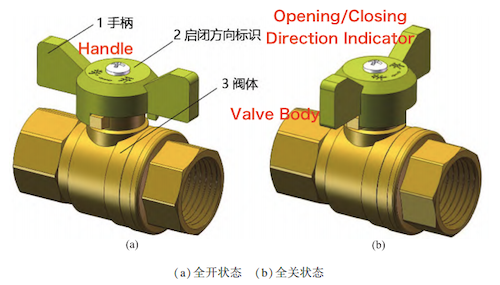
(a) Fully Open State (b) Fully Closed State
Figure 1 Schematic Diagram of the Overall Structure of a Regular Ball Valve
For R&D personnel, manufacturers, and gas installation and maintenance professionals, the above structural and operational requirements of ball valves represent essential technical knowledge. However, ordinary users are often unfamiliar with the rule of ‘clockwise to close, counterclockwise to open,’ and even less able to accurately determine whether the ball valve is currently open or closed. As a result, various issues often arise during gas use, such as mistakenly assuming the ball valve is already closed and failing to take the necessary shutoff measures, incorrectly believing the valve is not fully closed and operating it blindly—or even forcefully—in an attempt to shut it off, or having to request assistance from the gas company after being unable to use gas because the ball valve remains closed. These situations not only create potential safety hazards but also cause unnecessary inconvenience and add extra workload for gas utility companies. Furthermore, when the gas meter is installed in a confined or dimly lit space, it becomes even more difficult for users to determine whether the ball valve is open or closed.
To allow users to quickly and accurately determine whether the ball valve is open or closed—and thus prevent potential gas safety hazards—the proposed design incorporates an identifiable open/closed state mechanism into a standard ball valve. A marking gasket labeled ‘Open’ and ‘Closed’ is mounted on the upper part of the valve body, while a corresponding display window is integrated into the handle. As the handle is rotated, the ‘Open’ or ‘Closed’ marking visible in the display window directly reflects the actual operating state of the ball valve, as shown in Figure 2. Users can thus determine the valve’s on/off status simply by observing the indicator in the handle’s display window. This method of state identification is intuitive, convenient, and highly reliable, greatly reducing the risk of misjudgment and enhancing user safety during gas operation.
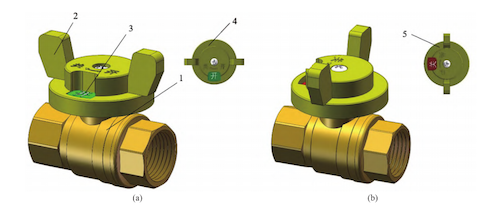
Figure 2 Overall structure of the ball valve with identifiable on/off status
The on/off status indicator gasket is positioned between the valve body neck and the handle. A circumferential groove is machined into the end face of the valve body neck and extends through the protruding neck section. The indicator gasket is seated and secured within this groove to prevent relative rotation. The handle, which incorporates a display window, is secured to the valve stem by screws and covers the indicator gasket. During valve opening and closing, the display window reveals the corresponding on/off status, as illustrated in Figure 3.
The on/off status identification mechanism effectively overcomes the difficulty users face in identifying the operating state of conventional ball valves. However, under nighttime or low-illumination conditions, particularly when valves are installed inside cabinets or other concealed locations, reliable visual identification of the valve state remains difficult. To address this limitation, luminous technology is incorporated into the indicator gasket, allowing the valve’s open/closed status to be rapidly and accurately identified under low-light conditions without auxiliary lighting. The indicator gasket substrate is made of a luminous gel board, on which two base color bands are printed at equal intervals using green and red inks. Hollow stencils engraved with the words ‘ON’ and ‘OFF’ are subsequently positioned over the corresponding green and red regions, respectively. Luminous paint is subsequently applied to the stencil openings through multiple printing cycles. Following baking and cooling for curing, a protective film is applied, and the gasket is finally stamped into its specified shape. This luminous display method is an environmentally friendly, low-carbon solution that stores light energy and emits visible light without batteries or external power sources, ensuring long-lasting and reliable indicator visibility.
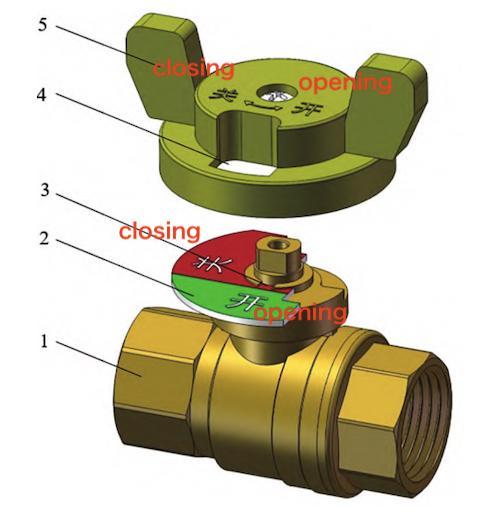
Figure 3 Structure of the on/off indicator gasket and handle display window
To enhance safety management and prevent gas-related accidents, gas companies commonly use ball valves equipped with locking and anti-tampering features. Currently, the most widely used product is the magnetic Lockable Ball Valve, which incorporates a concealed anti-tampering mechanism. The locking mechanism operates on the magnetic principle that like poles repel and opposite poles attract. When the ball valve is fully closed, an internal high-strength magnet restricts handle movement, thereby securing the valve in the locked position. The primary function of a conventional single-mode lockable ball valve is as follows: after the gas company completes installation and acceptance of the indoor gas pipeline, the ball valve is closed and locked, thereby cutting off the indoor gas supply and preventing user misuse or unauthorized opening that could result in gas leakage. When a user applies for gas service, a qualified gas company technician unlocks and opens the valve using a dedicated tool, after which normal gas usage can proceed. Additionally, in situations such as gas leaks, routine pipeline inspection and maintenance, installation or replacement of gas meters and appliances, or extended absence from the residence, users can independently close the ball valve to shut off the gas supply.
Accordingly, the use of lockable ball valves allows gas companies to manage safety effectively while ensuring secure gas usage for end users. However, with the widespread use of such valves, certain limitations have become apparent. Specifically, after fault rectification, completion of installation or maintenance, or return from a prolonged absence, users are unable to unlock and reopen the ball valve independently. Instead, a gas company technician must be dispatched to unlock the valve using a specialized tool before the gas supply can be restored. This requirement increases operation and maintenance costs for gas companies, prolongs users’ waiting times, and can disrupt residents’ daily activities to some extent. Therefore, there is a clear and urgent need to enhance the functional design of lockable ball valves to address these limitations.
The dual-mode magnetic lockable ball valve effectively overcomes the limitations of conventional single-mode lockable ball valves. The valve features two operating modes—management and user—which can be switched by rotating a stainless steel lever to accommodate various usage scenarios and operational requirements, as shown in Figure 4. When set to management mode, the valve functions like a conventional single-mode lockable ball valve. The valve can be opened and closed normally, and once it reaches the fully closed position, the magnetic locking mechanism is automatically engaged, instantly locking the handle. Reopening the valve in this mode requires the use of a dedicated unlocking tool.
When switched to user mode, the locking mechanism is disengaged, allowing the valve to be opened and closed freely without the need for a special key. In emergencies or during temporary or extended periods of non-use, users can operate the valve independently to quickly shut off the gas supply, thereby preventing accidents caused by gas leaks. After resolving a fault, completing installation or maintenance, or returning from an extended absence, the user can restore gas supply directly without the need for a gas company technician to unlock the valve. This design not only reduces operation and maintenance costs for gas companies but also eliminates the inconvenience for users caused by waiting for gas supply restoration.
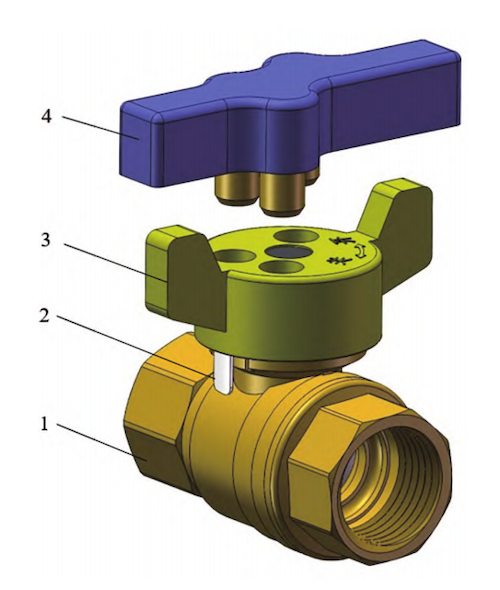
Figure 4 Overall structure of the dual-mode magnetic Lockable Ball Valve
The valve body of the dual-mode magnetic lockable ball valve features three small holes on its axial end face. Each hole houses a miniature spring and a high-strength magnetic pin. Once the stainless steel lever and handle are secured to the valve stem with screws, the ball valve forms a composite structure that integrates an anti-tampering locking mechanism in management mode, a free-opening configuration in user mode, and a reliable switching mechanism between the two modes, as shown in Figure 5.
(1) Anti-Theft Locking Structure in Management Mode
Of the three high-strength magnetic pins in the valve body neck, two are linearly aligned and serve as locking magnetic pins. When the ball valve is fully closed, the elastic force of the miniature springs pushes the upper portions of these two pins into the corresponding locking holes at the bottom of the handle. This engagement restricts the rotation of the handle, thereby achieving the ball valve’s locking function, as shown in Figure 6. A dedicated unlocking tool is required to unlock the valve. This tool is equipped with two linearly arranged high-strength magnetic pins, whose magnetic poles generate a repulsive force against the locking magnetic pins in the valve body. When the unlocking tool is inserted into the keyhole on the top of the handle, the resulting repulsive force overcomes the elastic force of the miniature springs, causing the locking magnetic pins to retract into the valve body. Once the rotational restriction on the handle is released, it can be turned to open the ball valve.
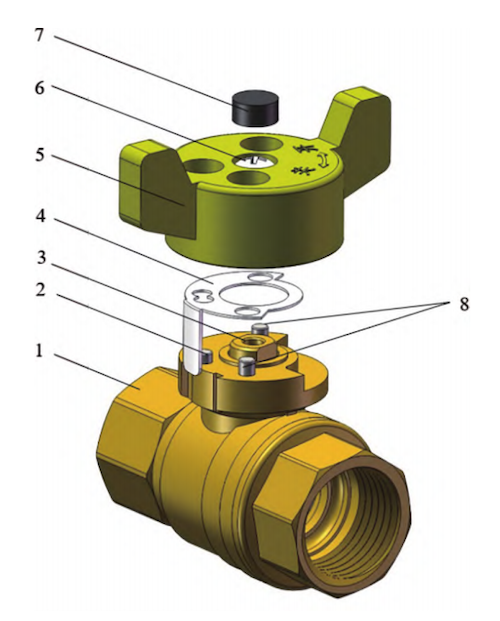
Figure 5 Opening structure of the dual-mode magnetic Lockable Ball Valve
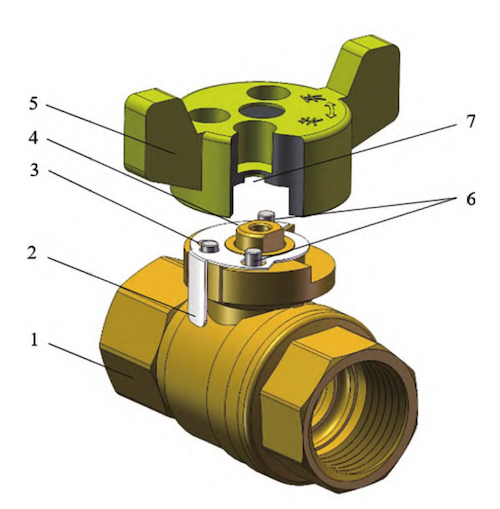
Figure 6 Management mode of the dual-mode magnetic Lockable Ball Valve (anti-theft locking)
(2) User-Mode Free Operation and Dual-Mode Switching Mechanism
The stainless steel lever beneath the handle is the key component that enables switching between management and user modes. One end of the lever can move axially within a guide groove in the valve body. In management mode, the lever is rotated clockwise so that the two clearance holes on its surface align with the two locking magnetic pins in the valve body. This alignment allows the locking magnetic pins to move freely within the clearance holes, enabling the valve to lock automatically when it reaches the fully closed position. To switch to user mode, the stainless steel lever is rotated counterclockwise with the unlocking tool while the valve is in the closed position. In this position, the solid section of the lever blocks the locking magnetic pins, preventing them from entering the handle’s locking holes. As a result, the handle can rotate freely, allowing the ball valve to be opened and closed without restriction, as shown in Figure 7.
Of the three magnetic pins in the valve body, two function as locking magnetic pins, while the third serves as an anti-rotation pin for the stainless steel lever. This anti-rotation pin does not interfere with the rotation of the handle. Under the repulsive force of the third magnet in the unlocking tool, it interacts with an ‘8’-shaped switching slot in the lever. Its primary function is to prevent unintended rotation of the stainless steel lever during handle operation, ensuring that the selected operating mode remains stable and functional. Notably, the magnetic polarity and functional arrangement of the anti-rotation pin are opposite to those of the two locking magnetic pins. This design makes unauthorized operation more difficult and further improves the ball valve’s overall anti-theft performance.
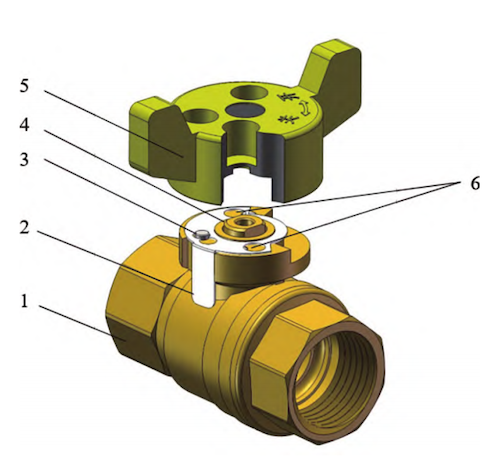
Figure 7 User mode of the dual-mode magnetic Lockable Ball Valve (free opening and closing)
This paper examines the application of ball valves installed upstream of gas meters and analyzes the potential safety hazards associated with their practical use. Based on this analysis, two ball valves with distinct functional features were developed. Both valves provide effective control of the indoor gas supply, helping to prevent gas-related accidents and ensuring the safety of users and their property. In addition, they greatly enhance user convenience and streamline operational management for gas companies, contributing to a safer, more efficient, and user-friendly gas supply environment.
(1) The ball valve with an identifiable on/off status, combined with its luminous marking technology, provides clear visualization of the operating state of indoor gas pipelines. This design enables users to quickly and accurately determine the current open or closed status of the ball valve, even at night or in low-light conditions, effectively preventing gas safety incidents caused by misjudgment or difficulty in identifying the valve’s status.
(2) The dual-mode magnetic lockable ball valve allows switching between management mode and user mode. In management mode, its anti-theft locking structure reduces the risk of unauthorized operation or illegal gas use before official gas commissioning, thereby minimizing potential safety hazards. In user mode, the free opening-and-closing design allows users to independently and quickly shut off the gas supply in emergencies, during temporary gas suspensions, or over extended periods of non-use after commissioning. It also allows users to restore gas supply promptly without on-site assistance from gas company personnel, substantially improving operational efficiency for gas utilities.

BALTIC VALVE CO., LTD supplies superior quality industrial valves covering ball valves, globe valves, gate valves, check valves, plug valves, butterfly valves, marine valves, forging steel valve, filter, etc.

How to Select Valves for Condensate Systems
Sep 30, 2026


PTFE vs. EPDM for Industrial Valves
Sep 18, 2026
Baltic Valve Co., Ltd.
Add: Baltic Valve Park, Siming, Xiamen, China.
Tel: +86 592 8266 140
Fax: +86 592 8266 440
Mail: [email protected]
Website: https://www.baltic-valve.com
Copyright © 2017-2026 Baltic Valve Co., Ltd. All rights reserved. Privacy Policy | Terms of Service
Website Design & Support: jeawin.com