
Applying Valve Diagnostic Technology During Nuclear Power Plant Commissioning
Abstract: The Initial Test Program (NRC RG 1.68) for water-cooled reactor nuclear power plants was revised from the 2007 edition to the 2013 edition, requiring that valve diagnostic tests be performed on active valves during the commissioning phase of nuclear power plants. During nuclear power plant commissioning, valve diagnostic tests are performed on pneumatic and electric valves that perform safety functions. Valve diagnostic tests utilize diagnostic equipment to monitor and record various parameters during valve operation without disassembling the valve, thereby generating characteristic curves. Engineers then analyze the curves, and the diagnostic software performs calculations to determine the output margin of the valve actuator and identify potential defects in the internal structure of the valve.
Pneumatic valve diagnostic systems are essential equipment in nuclear power plants. They play a critical role in system operation, fault detection, and data monitoring, improving operational efficiency and facilitating the timely identification of faults. For linear-stroke valves, to reduce costs, the actuator output force is generally calculated by multiplying the area of the pneumatic actuator by the air pressure, rather than using a strain gauge installed on the valve stem. Before diagnosis, the effective area of the pneumatic actuator must first be determined. An electrical converter is used to bypass the valve solenoid valve, and a 4–20 mA ramp signal is set through the main unit. The valve is slowly opened and closed, and the displacement and internal pressure of the pneumatic actuator are measured during the valve opening and closing process. After the valve opening and closing cycle, the software calculates various parameters, including the spring set range (Bench Set), spring constant, valve friction, valve seat force, and valve stroke length. For angular-stroke valves, due to the variability in actuator output efficiency, the diagnostic process requires attaching a strain gauge to the valve stem to directly measure the stem torque.
The valve seat force of a containment isolation valve is a critical parameter for safe operation. Its sealing performance is directly related to reactor safety and is a key factor in ensuring the reliable and stable operation of a nuclear power plant. If the seat force is insufficient, the containment isolation function may fail, potentially resulting in the leakage of radioactive materials into the environment under accident conditions. During valve diagnostics, the seating force of a containment isolation valve was measured at 4,070 lbs (in this article, both “lbs” and “lbf” are used to denote pounds, due to differing notation conventions among foreign manufacturers). The required seating force was greater than 4,713 lbs. On-site adjustments were made to the valve's pneumatic actuator spring, increasing the low Bench Set value from 21.02 psi to 23.70 psi to further tighten the valve. After adjustment, the valve seating force was measured at 5,103 lbs during diagnostic testing. A comparison before and after the spring adjustment is shown in Figure 1.
The triple-offset valve is a high-performance butterfly valve. In a properly functioning triple-offset butterfly valve, the stroke-torque diagnostic curve (stroke-torque-stroke curve) exhibits a significant increase in stem torque at the valve’s fully closed position, representing the seating torque. During valve diagnostics, no seating torque was observed. Adjustments to the pneumatic actuator’s closing limit switch revealed that the valve still lacked sufficient seating force, and its displacement remained unchanged.
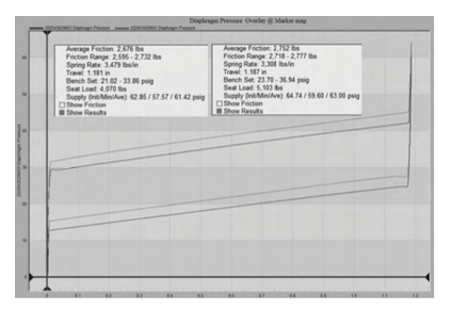
Figure 1. Comparison of Diagnostic Curves Before and After Spring Adjustment
The valve’s pneumatic actuator is of the fork type. Based on the observations above, it was determined that a defect at the fork connection caused premature limitation of the actuator spring, preventing the spring force from being transmitted to the valve stem. Upon disassembly, it was observed that the spring rod thread had retracted by approximately 20 mm, which prevented the valve from achieving proper seating. Following reinstallation of the spring push rod thread, the valve achieved normal seating. Figure 2 presents a comparison of the diagnostic results.
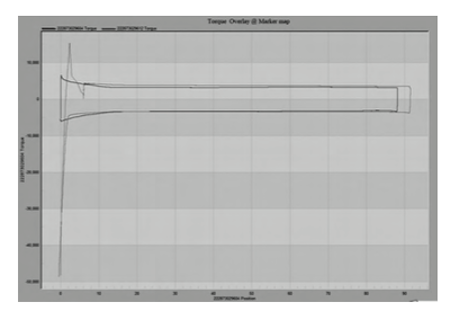
Figure 2. Comparison of Diagnostic Curves for Triple Eccentric Valves
Control valves are the most widely used equipment in process control systems. The regulating performance of water control valves is critical for adjusting the medium flow rate and maintaining the liquid level in the container. The input signal is gradually increased or decreased until a change in valve stroke is observed. The dead zone is defined as the absolute difference between the upper and lower input signal values corresponding to this change. The dead zone is caused by various factors, including friction, idle stroke, and valve shaft torsion. For critical control valves, such as condensate and feedwater control valves, the valve position must be able to respond accurately to small input signals. Therefore, measuring the valve dead zone is essential. Valve diagnostic equipment can gradually output current signals while simultaneously monitoring the valve position response. Figure 3 shows the dead zone measurement of the valve at the 50% position. The starting current for the upper stroke is 12.16 mA, and for the lower stroke, it is 11.97 mA. The dead zone at 50% is calculated as (0.16+0.03)/16×100%=1.19%.
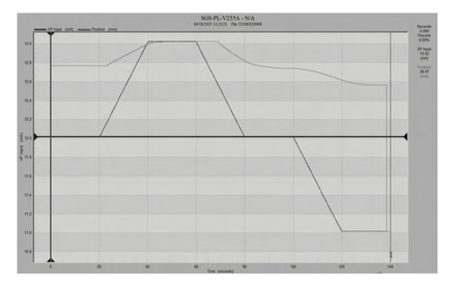
Figure 3 Dead Zone Measurement of Control Valve at 50% Stroke
The passive residual heat removal system (PRHRS) plays a critical role in the primary loop’s passive safety technology. It establishes natural circulation without external driving force, relying on differences in fluid density and equipment elevation within the primary loop. This circulation ultimately removes heat from the reactor core, preventing overheating. Passive operation imposes extremely high demands on the flow resistance of pipelines and valves. The outlet valve of the passive residual heat removal heat exchanger is a straight-through eccentric pneumatic regulating ball valve, featuring low flow resistance, fast opening and closing, and strong regulating performance. If the valve fails to seal properly and internal leakage occurs, the feed tank temperature within the containment will rise. This eliminates the density difference between hot and cold water, preventing cooling of the primary loop hot section and compromising passive protection based on density-driven circulation. Therefore, proper seating of the eccentric ball valve is essential. The diagnostic curve for the eccentric ball valve is shown in Figure 4. Unlike conventional ball valves, it must be fully seated in the closed position. It can be observed that the frictional force increases significantly as the valve approaches the fully closed position (indicated by the arrow). A certain pull-out torque is also required when the valve seat disengages from the sealing surface. The repeated displacement process shown in the boxed section also demonstrates that the frictional force of the eccentric ball valve as it wedges into the valve seat is very high.
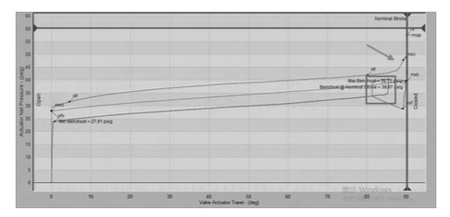
Figure 4. Diagnostic Curve of Eccentric Ball Valve
Safety-grade electric valves are critical components of the primary loop pressure boundary and the containment isolation system. Their reliable operation under design-basis conditions is essential to ensuring nuclear power plant safety. To ensure proper operation, diagnostic tests are conducted on electric valves that perform safety functions in the power plant. Electric valve diagnostic equipment collects data such as motor current and voltage, valve stem torque and thrust, valve stem displacement, the states of limit and torque switches, and disc spring compression. After generating the diagnostic curves, the software processes the data and analyzes valve friction, seat force, and switching time to verify the reliability of valve operation under power plant accident conditions. When the valve stem experiences torque or thrust, it deforms, causing the attached strain gauges to deform as well. The resistance of the strain gauges’ pre-installed bridge circuit changes accordingly. The valve diagnostic equipment monitors these changes and, using the valve stem dimensions, Young’s modulus, and Poisson’s ratio, calculates the torque or thrust applied to the valve stem.
The torque generated by the valve stem equals the stem thrust multiplied by the stem coefficient. The stem coefficient is a conversion factor that depends on the stem dimensions, thread type, and thread friction coefficient. The friction between the stem nut and the threads has a significant influence on the stem coefficient, thereby affecting the resulting stem thrust. During diagnostic testing of an electric valve, the stem torque was found to be comparable to the factory test value, while the stem thrust was significantly lower than the factory value. After cleaning and lubricating the valve and the stem nut and reinstalling the electric actuator, diagnostic testing showed that the seating force increased significantly. Figure 5 presents a comparison of the diagnostic results before and after relubrication of the valve stem and stem nut (before lubrication: friction coefficient 0.124, stem coefficient 0.0244, torque 1895.8 ft·lbf, and stem thrust 7774 lbf). Diagnostic results after lubrication: friction coefficient 0.062, stem coefficient 0.0155, torque 1931.38 ft·lbf, and stem thrust 12,470 lbf).
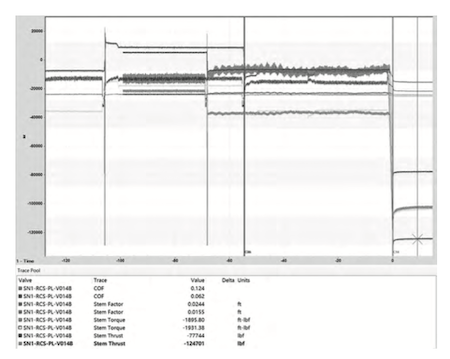
Figure 5: Comparison of diagnostic curves and data before and after valve stem lubrication
For valves equipped with torque-operated closing mechanisms, the torque switch is designed to terminate valve closure. Once the torque switch is actuated, the circuit opens and the motor stops operating. During the diagnostic testing of the electric valve, repeatability tests were conducted due to the uncertainty of the torque switch actuation. Two sets of data were collected for comparison, with the variation not exceeding 10%. The diagnostic comparison curves are shown in Figure 6. The final valve closing torque increased from 833.94 ft·lbf to 1017.51 ft·lbf, representing a change of 22%. On-site inspection revealed that the torque switch was loose, resulting in a significant increase in the final closing torque of the valve stem.
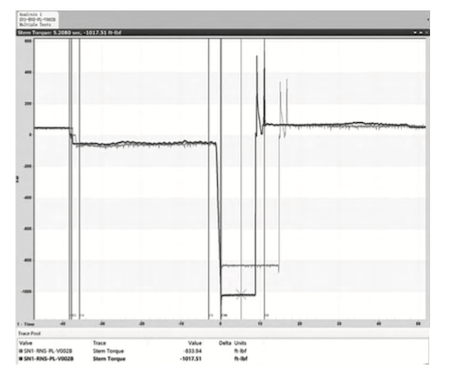
Figure 6: Valve thrust repeatability test comparison
Unlike pneumatic actuators, electric actuators generate higher output forces. To prevent damage to the valve back seal, a stroke of 0.25–0.5 in is typically set from the fully open position (with the valve opening limit disconnected) to the valve back seal position (valve fully opened manually), based on the actual valve stroke. This prevents the valve back seal from contacting due to the motor’s inertia after the electric actuator is de-energized. Figure 7 shows a typical back seal diagnostic curve for an electric valve after opening. After the valve is fully open (between 90 and 100 seconds on the horizontal axis), the valve stem tension increases sharply as the valve core contacts the valve back seal. If valve back seal contact occurs, the opening stroke position should be readjusted to prevent damage to the valve.
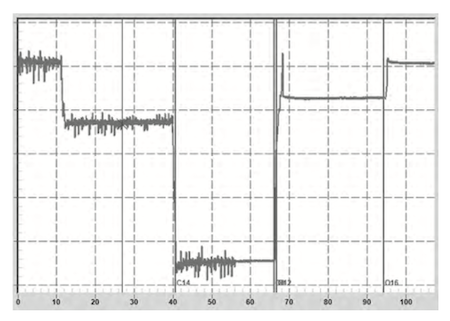
Figure 7: Electric Valve Back Seal Curve
Valve hammering occurs when the electric actuator is equipped with a physical torque switch, the valve is already closed, yet the closing signal continues to be applied. The torque switch activates, stopping the motor. However, if the torque switch recloses while the valve closing signal is still present, the valve will attempt to close again. This cycle repeats, resulting in excessive thrust or torque on the valve, which can ultimately cause irreparable damage to the valve body or failure of the electric actuator motor. Valve hammering is more common during the diagnosis of butterfly valves with smaller electric actuators. Due to the non-self-locking transmission mechanism of the actuator or loosening of the disc spring, the torque switch may open and then recloses. If a continuous closing command persists, the motor will restart after stopping, causing the valve to continue closing until it fully seats.
This process may repeat, resulting in progressively higher closing torque. Figure 8 shows the diagnostic diagram of valve hammering. Figure 8, from top to bottom, presents the valve stem torque curve, motor current curve, and the operation of the electric actuator torque switch. The figure clearly shows that the torque switch recloses after the valve reaches the fully closed position. The motor current curve also indicates that the motor restarts, resulting in a further increase in valve stem torque. Such hammering can cause damage to both the electric actuator and the valve. The electric valve diagnostic test is conducted via local MCC cabinet control, with a continuous switching command. If the actuator is not self-locking or the disc spring is loose, valve hammering may occur. This can be prevented by replacing the disc spring and increasing the torque switch setting. During actual unit operation, the valve is controlled from the main control room, where the issued signal is a pulse signal. Even if the torque switch re-engages due to actuator issues, valve hammering does not occur. During testing, by further increasing the torque switch setting and repeating the test, the hammering phenomenon was eliminated.
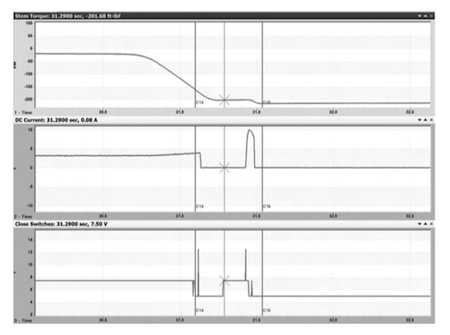
Figure 8. Electric Valve Hammer Impact Diagnosis Diagram
Based on a thorough understanding of valve aging mechanisms, corresponding management strategies are proposed. Key industry concerns, including thermal aging of martensitic valve stems, valve leakage, electric valve monitoring, and pneumatic valve diaphragm failure, are discussed. During the commissioning phase, initial valve diagnostic testing is completed, and the results serve as benchmark data for the equipment after on-site installation. This data is compared with the design requirements to evaluate the valve condition, analyze stress at critical points, and determine whether the actuator output meets the required performance. The data provides a basis for subsequent valve component aging management and corrective maintenance, such as replacing pneumatic actuator springs, valve packing, lubricating electric valve stem threads, and replacing disc springs.

BALTIC VALVE CO., LTD supplies superior quality industrial valves covering ball valves, globe valves, gate valves, check valves, plug valves, butterfly valves, marine valves, forging steel valve, filter, etc.


PTFE vs. EPDM for Industrial Valves
Sep 18, 2026

Valve Type and Actuator Torque Selection
Sep 06, 2026
Baltic Valve Co., Ltd.
Add: Baltic Valve Park, Siming, Xiamen, China.
Tel: +86 592 8266 140
Fax: +86 592 8266 440
Mail: [email protected]
Website: https://www.baltic-valve.com
Copyright © 2017-2026 Baltic Valve Co., Ltd. All rights reserved. Privacy Policy | Terms of Service
Website Design & Support: jeawin.com