
An Automatic Detection Device for Floating Ball Valves (Part one)
Abstract: The hydrogen-side oil return control box is a critical component of the dual-circulation seal oil system in turbine generators, and its liquid level is primarily controlled by the opening and closing of floating ball valves. Currently, the inspection of these floating ball valves relies mainly on manual procedures, which are cumbersome and labor-intensive. Based on the existing manual inspection workflow, an automatic detection device was designed to automatically fill the hydrogen-side oil return control box with liquid and gas and precisely calibrate the opening and closing liquid levels of the floating ball valves. This device utilizes a Programmable Industrial Controller (PIC) to automatically control the oil pumps and control valves, sequentially delivering oil and gas according to a predefined protocol. It also employs flow and pressure sensors to monitor and record data, allowing the precise calculation of the floating ball valves’ opening and closing levels. To validate the device’s performance, field tests were conducted to inspect the floating ball valves and calibrate their opening and closing levels. The results demonstrate that the device achieves higher calculation accuracy than magnetic flap liquid level gauges, making it suitable for calibrating floating ball valve opening and closing levels and capable of replacing manual inspection methods.
Currently, large-scale turbine generators predominantly use the “water-hydrogen-hydrogen” cooling method. For hydrogen-cooled turbine generator units, three critical safety parameters are the prevention of hydrogen leakage, the maintenance of hydrogen purity within the generator, and the prevention of oil ingress. The hydrogen-side oil return control box is a critical component of the dual-circulation peripheral-sealing oil system, responsible for oil storage, maintaining continuous oil supply, ensuring stable oil levels, and preventing the leakage of pressurized hydrogen from the generator. The liquid level in the hydrogen-side oil return control box is regulated by floating ball valves; a failure of any floating ball valve could compromise both hydrogen purity and system pressure. Consequently, during major equipment overhauls, the oil-replenishment and oil-discharge floating ball valves must be functionally verified, and their opening and closing levels adjusted if they do not meet the specified requirements. Currently, the inspection of these floating ball valves relies primarily on manual procedures. The elevated position of the oil tank and the confined workspace make the inspection process cumbersome, labor-intensive, and time-consuming.
Zhengjun Liu et al. proposed a method using blanking plates and oil-filling branch lines to reduce inspection steps, with flow sensors employed to determine the open status of the floating ball valves. However, this method still requires manual operation and reading of liquid level values. Dongjin Lu et al. employed data acquisition modules and pressure-regulating valves to record pressure and flow parameters during factory commissioning. However, their method was unable to detect the opening and closing liquid levels of the floating ball valves. To address this issue, this paper presents the development of an automatic testing device, based on the existing floating ball valve maintenance workflow, which enables automatic oil and gas filling of the hydrogen-side oil return control box. Furthermore, the device enables precise calibration of the floating ball valves’ opening and closing levels without requiring connection to the main control system’s liquid level sensors. The device effectively reduces the physical workload of field personnel, shortens maintenance time, and mitigates the risk of unit downtime, thereby enhancing the operational safety and stability of the power plant.
The hydrogen-side oil return control box functions as the main reservoir for the hydrogen-side oil circuit in the generator’s seal oil system. It is internally equipped with automatic oil-replenishment and drainage mechanisms. Its upper section is in fluid communication with the generator interior, using the generator’s hydrogen pressure to automatically drain oil into the air-side oil tank, while simultaneously relying on the air-side seal oil pump pressure to enable automatic oil replenishment. As shown in Figure 1, the upper section of the hydrogen-side oil return control box is connected to the defoaming boxes at both ends of the generator. It is also equipped with a vent port to maintain hydrogen pressure in the tank equal to that inside the generator, thereby ensuring the smooth return of oil from the defoaming boxes to the hydrogen-side oil return control box. The tank contains a float-operated oil drainage valve and a float-operated oil replenishment valve. When the liquid level becomes too high, the left-side float rises and, actuated by a connecting rod, opens the drainage valve, allowing oil to be expelled by the tank’s internal hydrogen pressure.
Conversely, when the liquid level falls too low, the right-side float descends and, actuated by a connecting rod, opens the replenishment valve to refill the tank. Liquid level adjustment nuts on the connecting rods allow independent calibration of the opening and closing levels of both the drainage and replenishment floating ball valves. To prevent the drainage or replenishment floating ball valves from sticking—which could disrupt normal oil flow—the tank is also equipped with manual override valves (“force-open” and “force-close”) for both drainage and replenishment circuits, allowing manual intervention in emergencies.
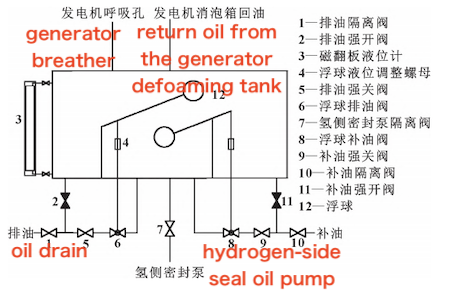
Figure 1. Schematic of the hydrogen-side oil return control box
- Oil Drain Isolation Valve
- Forced-Open Oil Drain Valve
- Magnetic Flap Level Gauge
- Float Level Adjustment Nut
- Forced-Close Oil Drain Valve
- Float-Operated Oil Drain Valve
- Hydrogen-Side Seal Pump Isolation Valve
- Float-Operated Oil Makeup Valve
- Forced-Close Oil Makeup Valve
- Oil Makeup Isolation Valve
- Forced-Open Oil Makeup Valve
- Floating ball
Malfunctions of the automatic float-operated oil makeup and drain valves in the hydrogen-side oil return control box—or incorrect liquid level settings—can cause the oil tank to simultaneously drain and replenish oil. This can lead to a large exchange of seal oil between the hydrogen-side and air-side terminals, causing faults such as reduced hydrogen purity inside the generator, excessive oil ingress, and hydrogen leakage. During major overhauls at the power plant, these floating ball valves must be inspected and calibrated. Specifically, it is necessary to verify the closing level of the float drain valve and the opening level of the float makeup valve under actual operating hydrogen pressure conditions.
The current inspection procedure primarily consists of the following steps:
(1) Install oil inlet and gas inlet piping at the upper flange ports of the oil tank.
(2) Disconnect the downstream piping of the float drain valve and the float makeup valve, and install blind plates and ball valves to regulate the outflow rate and observe whether the float drain and makeup valves operate properly.
(3) Actuate Makeup Forced-Close Valve 9 to disable the automatic function of Float Makeup Valve 8, allowing the tank to be filled with oil to a high level for drain valve testing.
(4) Actuate Makeup Forced-Closure Valve 9 to disable the automatic function of Float Makeup Valve 8, thereby ensuring that during subsequent testing, oil can be filled into the tank up to a high liquid level to facilitate the testing of the drain valve.
(5) Fill the oil tank from the upper inlet and observe the downstream piping connected to Float Drain Valve 6 for any signs of oil leakage to prevent excessive oil exchange between the air side and the hydrogen side during operation.
(6) Slowly fill the oil tank until oil begins to flow from the downstream end of Float-Operated Oil Drain Valve (6); record the liquid level at which the valve opens to calibrate its opening level.
(7) Add a measured amount of oil, close the oil inlet valve, and open the gas inlet valve to pressurize the tank with nitrogen to the operating hydrogen pressure, simulating actual service conditions.
(8) Open the ball valve on the downstream blanking plate of Float-Operated Oil Drain Valve (6) and observe when the oil flow stops, indicating that the valve has closed, to calibrate its closing level.
(9) Close the override of Float-Operated Oil Makeup Valve (9) to allow the valve to function normally; open the ball valve on the downstream blanking plate of Float-Operated Oil Makeup Valve (8) to check for oil outflow, to verify that the valve is leak-free.
(10) Open Oil Drain Override Valve (2) to drain the tank, and monitor the ball valve on the downstream blanking plate of Float-Operated Oil Makeup Valve (8) for oil outflow; once oil begins to flow, calibrate the valve’s opening level.
(11) Purge the tank of nitrogen and oil, then adjust the float level nuts according to the calibrated levels, and then repeat the procedure.
Due to the complexity of floating ball valve maintenance and the elevated installation of the hydrogen-side oil return control box, on-site personnel face a heavy workload. Furthermore, frequent oil-draining and gas-venting operations can cause environmental contamination on site. During level calibration, when sensor data is transmitted to the DCS, on-site personnel rely on visual inspection of magnetic flap level gauges to perform the calibration. Relying on manual methods can introduce deviations in the calibrated level readings. Consequently, there is a pressing need for an automatic detection and calibration device to replace manual floating ball valve calibration.
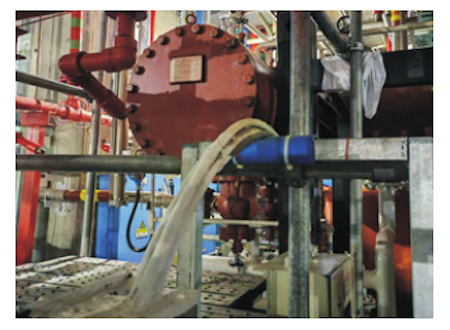
Figure 2: On-site view of the hydrogen-side oil return control box
The automatic floating ball valve detection device is primarily designed based on the established manual maintenance procedures. This automated unit can sequentially load the required liquids and gases, enabling the hydrogen-side oil return control box to undergo automated oil filling and gas pressurization. The oil-filling and gas-charging lines are fitted with control valves to regulate flow and isolate the oil circuit. Dedicated return-flow detection lines are installed downstream of both the float-operated oil replenishment and drain valves. Using the associated sensors, the device can detect oil flow through these lines, thereby determining the open or closed status of the oil replenishment and drain valves. At the end of the testing sequence, the automatic detection device recovers the oil, eliminating the need for manual draining.

BALTIC VALVE CO., LTD supplies superior quality industrial valves covering ball valves, globe valves, gate valves, check valves, plug valves, butterfly valves, marine valves, forging steel valve, filter, etc.


PTFE vs. EPDM for Industrial Valves
Sep 18, 2026

Valve Type and Actuator Torque Selection
Sep 06, 2026
Baltic Valve Co., Ltd.
Add: Baltic Valve Park, Siming, Xiamen, China.
Tel: +86 592 8266 140
Fax: +86 592 8266 440
Mail: [email protected]
Website: https://www.baltic-valve.com
Copyright © 2017-2026 Baltic Valve Co., Ltd. All rights reserved. Privacy Policy | Terms of Service
Website Design & Support: jeawin.com